



What's Happening?
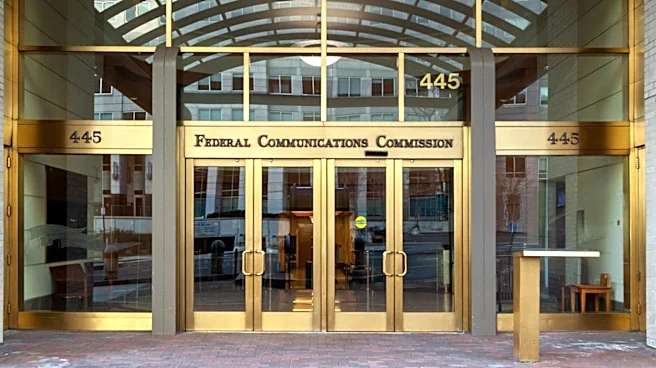
The Federal Communications Commission (FCC) is actively engaged in various legislative and regulatory initiatives concerning U.S. communications. These efforts include modernizing and improving the Broadband Funding Map to ensure the most efficient use
of federal funds for broadband deployment, as outlined in S. 2585. The FCC is also involved in combating robocalls through proposed legislation such as the Foreign Robocall Elimination Act (S. 2666) and the Protecting American Consumers From Robocalls Act (S. 4307), which aim to expand Do Not Call rules and provide private rights of action for consumers. Furthermore, the FCC is working on providing parents with clear, accurate, and useful information about video programming content to help them make informed decisions for their children, as referenced in H. Res. 1374. Other areas of focus include supporting improved awareness and coordination of federal communications resources during disasters and emergencies (S. 4691) and addressing advertising volume requirements for video programming delivered via Internet protocol (H.R. 7308).
Why It's Important?
These FCC initiatives are crucial for several aspects of U.S. society and the economy. Modernizing broadband funding is vital for bridging the digital divide, ensuring that more Americans have access to high-speed internet, which is essential for education, business, and healthcare in an increasingly digital world. This directly impacts economic development in underserved areas and promotes equitable access to opportunities. The efforts to combat robocalls are significant for consumer protection, aiming to reduce the pervasive nuisance and potential fraud associated with unwanted automated calls, thereby enhancing trust in telecommunications services. Providing clear information about video programming content empowers parents to safeguard their children from inappropriate material, reflecting a broader societal concern for child welfare and media literacy. Additionally, improving disaster communication coordination is critical for national security and public safety, ensuring timely and effective responses during emergencies.
What's Next?
The various bills and resolutions currently under consideration indicate a busy legislative agenda for the FCC. The Modernization, Accountability, and Planning (MAP) for Broadband Funding Act (S. 2585) and the Broadband Mapping Accurate Providers (Broadband MAP) Act (S. 5015) suggest ongoing efforts to refine broadband deployment strategies and ensure accurate data. The Foreign Robocall Elimination Act (S. 2666) and the Protecting American Consumers From Robocalls Act (S. 4307) are likely to proceed through legislative channels, potentially leading to stronger regulations and enforcement mechanisms against robocalls. The resolution regarding video programming content (H. Res. 1374) may lead to new guidelines or requirements for content providers. The FCC will also continue to address issues related to disaster response, telecommunications infrastructure, and consumer access to services, with potential for new regulations or amendments to existing ones based on the progress of these legislative efforts.
Beyond the Headlines
Beyond the immediate policy implications, the FCC's work touches upon fundamental issues of digital equity, consumer trust, and media responsibility. The push for better broadband funding and mapping highlights the evolving definition of essential infrastructure in the 21st century, where internet access is increasingly seen as a basic right rather than a luxury. The fight against robocalls underscores the ongoing challenge of maintaining privacy and security in a technologically advanced communication landscape, prompting questions about the balance between innovation and regulation. Furthermore, the focus on parental guidance for video content reflects a broader societal debate about media's influence on youth and the role of regulatory bodies in shaping a responsible media environment. These efforts collectively contribute to shaping the future of communication in the U.S., impacting everything from economic competitiveness to individual well-being and civic engagement.