


What's Happening?
The International Monetary Fund (IMF) has criticized China's economic policies, highlighting their negative impact on both domestic and global economies. In its annual review of China's economy, the IMF emphasized the need for China to shift towards a consumption-led
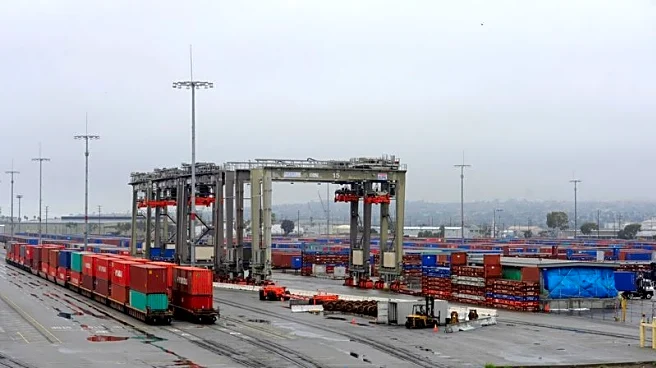
growth model. The report pointed out China's large current-account surplus and the adverse effects of its export-driven growth, which have been exacerbated by the real depreciation of the renminbi. The IMF's executive directors called for significant policy changes, including increased macroeconomic support and structural reforms, to address these issues. The report also noted concerns about China's industrial policies, which have led to resource misallocation and fiscal costs. China's representative on the IMF's executive board, Zhengxin Zhang, defended the country's economic strategies, attributing export growth to competitiveness and innovation.
Why It's Important?
The IMF's critique of China's economic model is significant as it underscores the broader implications of China's policies on the global economy. China's reliance on exports and its large current-account surplus have created imbalances that affect international trade dynamics. The IMF's call for a shift to a consumption-led model suggests that China's current approach may not be sustainable in the long term. This situation has potential repercussions for global markets, as changes in China's economic policies could influence trade relationships and economic stability worldwide. The IMF's recommendations for structural reforms and increased macroeconomic support highlight the need for China to address internal economic challenges, such as deflationary pressures and high government debt, which could have ripple effects on global economic health.
What's Next?
The IMF's recommendations may prompt China to reconsider its economic strategies, particularly as it prepares to set its economic targets for 2026. The upcoming National People's Congress will be a critical moment for China to outline its economic plans and potentially address the IMF's concerns. If China decides to implement the suggested reforms, it could lead to a rebalancing of its economy, with increased focus on domestic consumption. This shift could alter global trade patterns and impact countries that are heavily reliant on Chinese exports. Additionally, the IMF's emphasis on structural reforms may encourage other nations to reassess their economic policies in response to China's potential changes.
Beyond the Headlines
The IMF's critique of China's economic model also raises questions about the broader implications of state-driven economic policies. The report highlights the challenges of balancing government intervention with market forces, a dilemma faced by many countries. China's experience may serve as a case study for other nations grappling with similar issues, particularly in terms of managing industrial policies and addressing fiscal sustainability. The IMF's focus on deflationary pressures and government debt also underscores the importance of maintaining economic stability in the face of global uncertainties. As China navigates these challenges, its approach could influence international economic policy discussions and shape future economic frameworks.