






What's Happening?
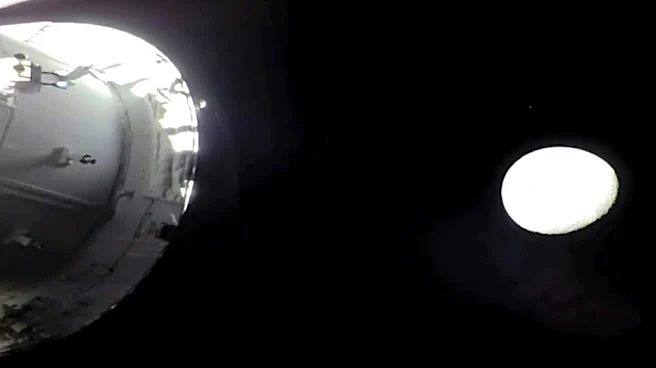
NASA's Artemis II mission is set to provide unprecedented views of the Moon through advanced imaging technology. Redwire has equipped the Orion capsule with 11 cameras, both inside and outside, to capture high-resolution images and videos. These cameras will
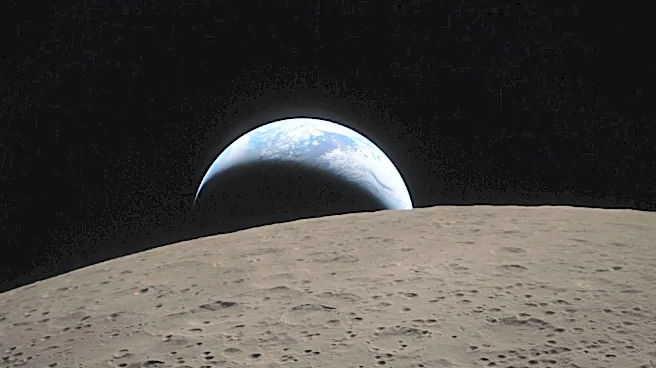
document key flight milestones, such as module separation and reentry, and offer 'glamor shots' of the Moon and Earth. The imagery serves dual purposes: public engagement and mission-critical functions, including optical navigation. The mission features astronauts Reid Wiseman, Christina Koch, Victor Glover, and Jeremy Hansen, with Koch and Glover making history as the first woman and person of color to head to the Moon, and Hansen as the first non-American.
Why It's Important?
The Artemis II mission marks a significant step in NASA's efforts to return humans to the Moon, with enhanced imaging technology playing a crucial role in public engagement and mission success. The high-resolution images and videos are expected to inspire a new generation, similar to the impact of the Apollo program's Earthrise image. The mission also highlights NASA's commitment to diversity and international collaboration, with a diverse crew making historic achievements. The dual use of cameras for public relations and mission requirements underscores the importance of technological advancements in space exploration.
What's Next?
Following the Artemis II mission, NASA plans to continue its lunar exploration efforts with Artemis III, which will feature live images of astronauts on the lunar surface for the first time in decades. Redwire's experience in capturing images from previous missions will be leveraged to enhance the visual documentation of this historic event. The success of Artemis II's imaging technology may influence future missions, encouraging further investment in advanced camera systems for space exploration.