
What's Happening?
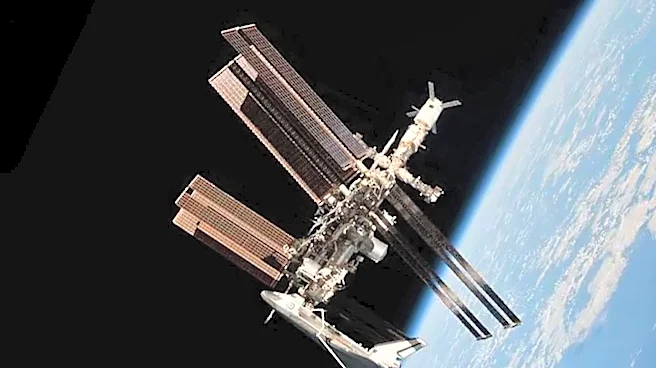
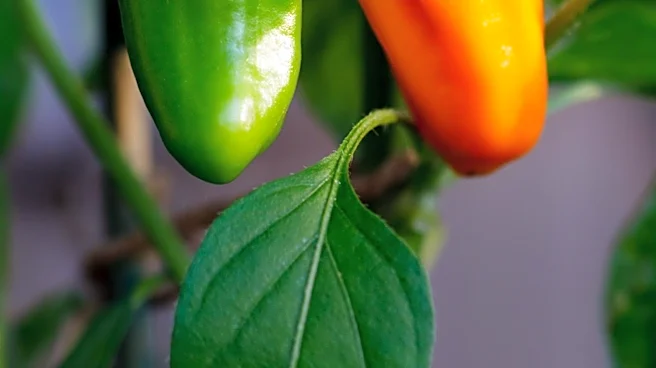
In 2021, NASA successfully cultivated Hatch chile peppers aboard the International Space Station (ISS) for 137 days, marking the longest plant experiment in ISS history. Four plants in the Advanced Plant Habitat yielded 26 peppers. A notable observation
from this experiment was that the pedicels, the small stems connecting the flower to the fruit, grew completely straight in microgravity, unlike their curved growth on Earth due to gravity. This structural anomaly, described by Matt Romeyn of NASA’s Kennedy Space Center as a 'microgravity effect,' indicates that the plant's architecture is partly a response to its own weight. The peppers were harvested in two batches, with some consumed by the crew and others frozen for microbial analysis back on Earth.
Why It's Important?
This experiment is crucial for understanding the fundamentals of agriculture in space and advancing long-duration space missions. The ability to grow fruiting crops like chile peppers, which require flowering, pollination, fruit setting, and ripening, represents a significant step beyond leafy greens previously cultivated on the ISS. Fresh produce provides essential nutrients like Vitamin C, which degrades in stored food, and helps combat 'taste fatigue' among astronauts. The observation of straight pedicels offers valuable insights into plant biology and how microgravity influences growth patterns, which can inform future plant designs and cultivation techniques for space environments. The successful microbial analysis, which found low microbial counts and no foodborne pathogens, is vital for ensuring the safety of space-grown food.
What's Next?
NASA plans to continue growing other crops, such as dwarf tomatoes and more leafy greens, using similar hardware and methodologies. The insights gained from the Hatch chile pepper experiment will be applied to optimize plant growth systems for future space missions, particularly those involving extended stays on the Moon or Mars. Further research will likely focus on understanding the microgravity effects on other plant characteristics, such as capsaicin production, and refining pollination techniques in space. The goal is to develop reliable and efficient methods for producing fresh food, reducing reliance on resupply missions, and enhancing astronaut well-being during long-duration space travel.
Beyond the Headlines
The success of growing chile peppers in space has broader implications for sustainable living beyond Earth. It demonstrates the potential for closed-loop agricultural systems that could support human settlements on other planets. The unexpected straight growth of the pedicels highlights how fundamental biological processes can be altered in novel environments, prompting a re-evaluation of plant physiology. This research not only addresses the practical challenges of space agriculture but also contributes to a deeper scientific understanding of life itself and its adaptability. The project also serves as an inspiring example of human ingenuity in overcoming environmental constraints to sustain life in extreme conditions.