







What's Happening?
The York County Detention Center in Rock Hill, South Carolina, is under ongoing scrutiny from governmental oversight bodies and community advocacy groups regarding its operations. Concerns have been raised about inmate treatment, healthcare provision,
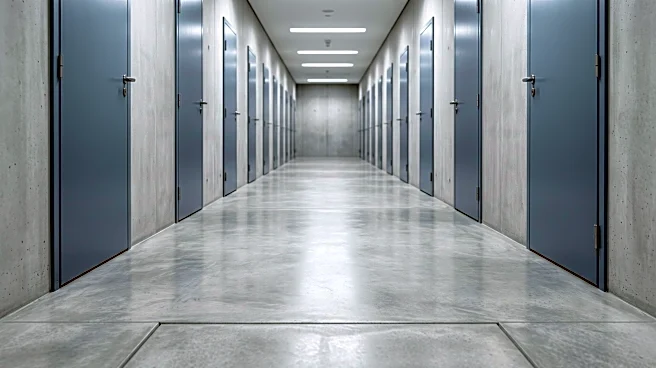
and the use of solitary confinement. Local news reports and statements from advocacy organizations have highlighted specific instances that question the facility's adherence to constitutional standards of care. The detention center houses a diverse population, including pretrial detainees and individuals serving short sentences, reflecting broader national trends with an overrepresentation of lower socioeconomic and minority communities. Common charges include drug possession, DUI, theft, and probation violations. The facility maintains a rigid daily schedule for inmates, encompassing morning roll calls, meals, recreation time, and work assignments, with conditions varying based on security classification.
Why It's Important?
The operations of the York County Detention Center have a significant impact on the local community and economy. The facility provides employment for correctional officers, healthcare professionals, and support staff within York County. Discussions about its funding, operations, and potential reforms are deeply intertwined with the local social fabric. Issues such as the adequacy of medical and mental health services, the use of solitary confinement, and inmate deaths in custody raise fundamental questions about public safety, human rights, and the justice system's effectiveness. Critics argue that limited resources and high caseloads can lead to delayed treatment, exacerbating health conditions, while prolonged solitary confinement can cause severe psychological harm. These concerns underscore the broader national conversation about incarceration rates, rehabilitation, and accountability within correctional facilities.
What's Next?
The future of the York County Detention Center will likely involve continued debates on incarceration rates, rehabilitation methodologies, and resource allocation. Potential reforms may focus on diverting individuals with mental health or substance abuse issues away from incarceration. There could also be an emphasis on implementing more robust educational and vocational training programs for detainees. Additionally, enhancing transparency in facility operations is a probable area of focus for oversight bodies and advocacy groups. Investigations into inmate deaths by internal affairs, the South Carolina Law Enforcement Division, and potentially federal authorities will continue to scrutinize existing protocols for monitoring at-risk individuals. Community advocacy groups and faith-based organizations are expected to continue providing essential services like reentry programs and support to individuals transitioning out of the facility.
Beyond the Headlines
The issues at the York County Detention Center highlight deeper ethical and legal implications concerning the balance between punishment and rehabilitation within the U.S. criminal justice system. The overrepresentation of individuals from lower socioeconomic backgrounds and minority communities within the jail population points to systemic inequalities. The debate over solitary confinement touches upon fundamental human rights and the psychological impact of isolation. Furthermore, the economic footprint of the detention center, while providing jobs, also signifies the financial burden of incarceration on local communities. The ongoing scrutiny and calls for reform reflect a societal shift towards questioning the efficacy and humanity of current carceral practices, pushing for a more equitable and rehabilitative approach to justice.