



What's Happening?
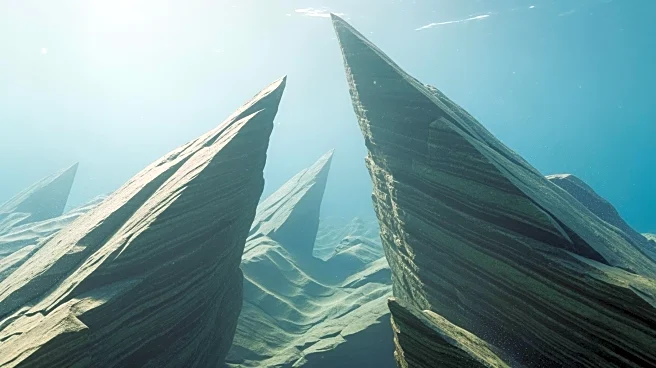
The Yonaguni Monument, located off Japan's Yonaguni Island, is a geological formation that has sparked debate among geologists regarding its origins. Discovered in 1987, the structure resembles a vast, stepped citadel submerged underwater. While some,
like geologist Masaaki Kimura, argue that the monument was modified or constructed by humans before being submerged around 10,000 years ago, the majority of geologists attribute its formation to natural processes. The monument's stepped sandstone and mudstone form is believed to be shaped by tectonic stresses and erosion. The region's earthquake activity contributes to the regularity of the fractures, creating the monument's distinct appearance. Despite its striking resemblance to man-made structures, no archaeological evidence supports human involvement.
Why It's Important?
The debate over the Yonaguni Monument's origins highlights the complexities of distinguishing between natural and human-made structures in geology. This discussion is significant as it challenges our understanding of ancient civilizations and their capabilities. If proven to be man-made, the monument could reshape historical narratives about early human engineering and settlement patterns. Conversely, if natural, it underscores the Earth's ability to create complex structures through geological processes. The ongoing debate also emphasizes the need for further research and exploration in underwater geology, a field that remains underexplored due to its logistical challenges and costs.
What's Next?
Further studies and underwater surveys are necessary to conclusively determine the origins of the Yonaguni Monument. However, due to the high costs and difficulties associated with underwater exploration, comprehensive research may be delayed. Geologists may continue to rely on indirect methods, such as analyzing similar formations and erosion patterns, to draw conclusions. The scientific community may also engage in more interdisciplinary collaborations, combining geology, archaeology, and technology to explore the site more effectively. Public interest in the monument could drive funding and support for future expeditions.
Beyond the Headlines
The Yonaguni Monument serves as a reminder of the Earth's dynamic nature and the ongoing processes that shape its surface. It also raises questions about the preservation of underwater cultural heritage and the ethical considerations of exploring such sites. As climate change impacts sea levels and ocean currents, understanding these formations becomes increasingly relevant. The monument's allure as a potential 'lost city' also reflects humanity's fascination with uncovering ancient mysteries and the stories they may hold about our past.