



What's Happening?
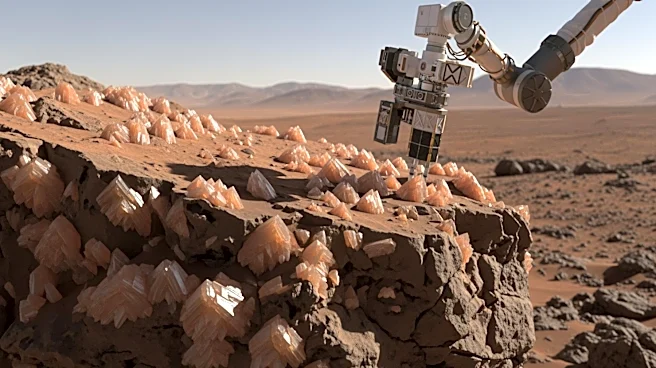
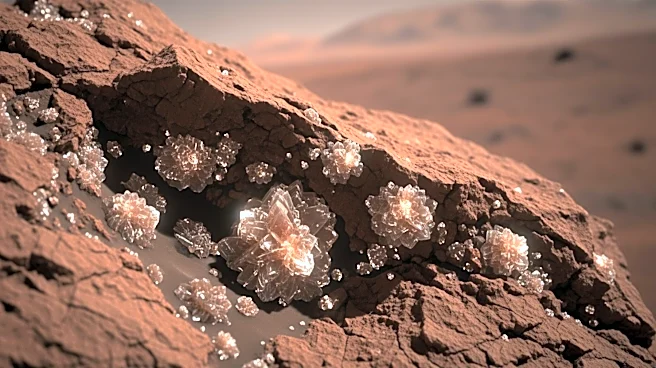
NASA's Curiosity rover has identified seven new organic molecules on Mars, marking the most diverse collection of such compounds found on the planet to date. These molecules were discovered in a rock sample from Mount Sharp, an area that was once covered by
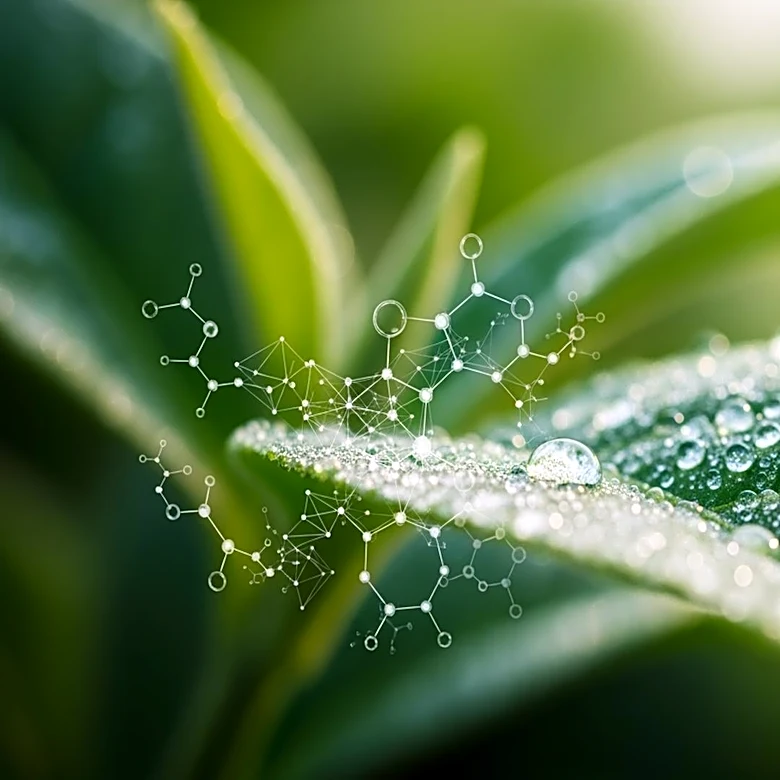
lakes and streams. The presence of these organic compounds, which include a nitrogen heterocycle, suggests that ancient Mars had the right chemistry to support life. The discovery adds to the growing evidence of Mars' potential to preserve organic materials despite harsh conditions.
Why It's Important?
The discovery of new organic molecules on Mars is significant as it enhances our understanding of the planet's past habitability. These findings could provide insights into the potential for life beyond Earth and inform future missions aimed at exploring Mars' surface and subsurface. The presence of nitrogen heterocycles, which are precursors to RNA and DNA, is particularly noteworthy as it suggests the possibility of complex organic chemistry on Mars.
What's Next?
Further analysis and exploration are needed to determine the origin of these organic molecules and their implications for life on Mars. Future missions, including those involving sample return, could provide more detailed information about the planet's geological and chemical history. Continued research will help scientists assess the potential for past or present life on Mars and guide the search for life elsewhere in the solar system.