







What's Happening?
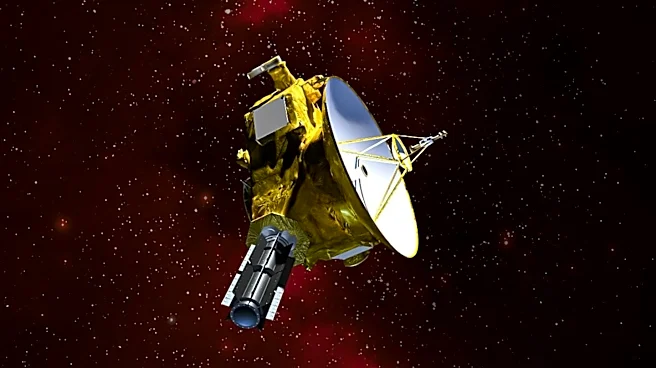
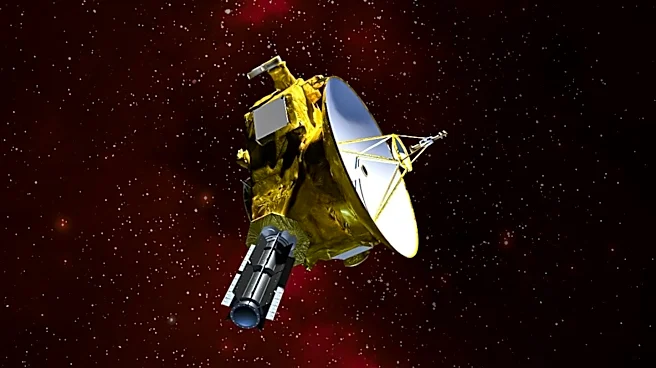
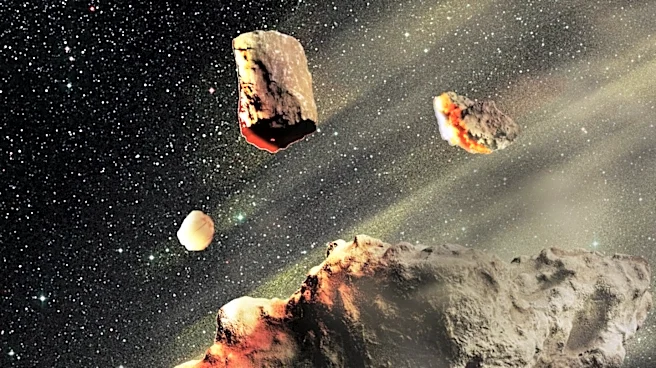
NASA's New Horizons spacecraft has awakened from a 321-day hibernation and is preparing to enter interstellar space. Currently located about 5.9 billion miles from Earth, the probe is moving through the Kuiper Belt and approaching the heliosphere's edge,
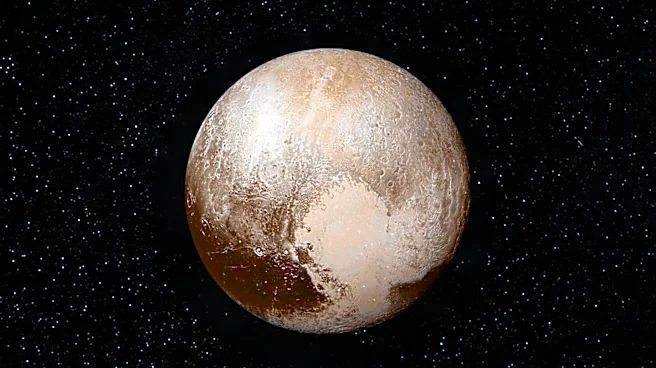
a region shaped by the sun's charged-particle wind. New Horizons is expected to encounter the termination shock, where the solar wind slows as it meets interstellar wind, between 2029 and 2040. This mission follows previous milestones, including flybys of Jupiter, Pluto, and the Kuiper Belt object Arrokoth.
Why It's Important?
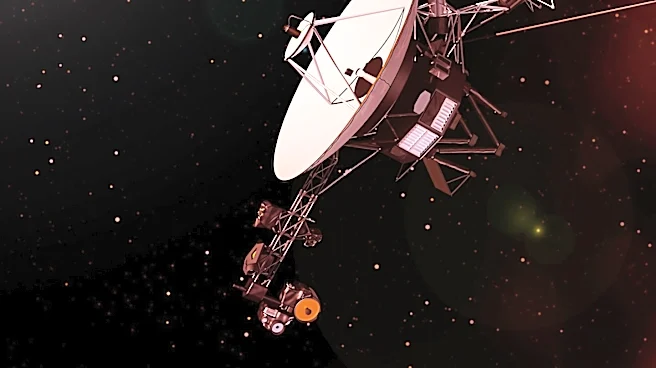
The New Horizons mission provides valuable insights into the outer reaches of our solar system and the transition to interstellar space. By studying the heliosphere's boundaries, scientists can better understand the sun's influence and the nature of interstellar space. The data collected will enhance our knowledge of space physics and inform future interstellar missions. As only the third spacecraft to reach this region, New Horizons offers a unique opportunity to study the solar system's outer limits with advanced scientific instruments.
Beyond the Headlines
The exploration of the heliosphere's boundaries has broader implications for understanding cosmic phenomena and the potential for future interstellar travel. The data from New Horizons could refine models of the sun's influence and help scientists predict how solar activity affects space weather. This knowledge is crucial for protecting spacecraft and astronauts from high-energy radiation. Additionally, the mission highlights the importance of long-term space exploration and the need for continued investment in scientific research to expand our understanding of the universe.