








What's Happening?
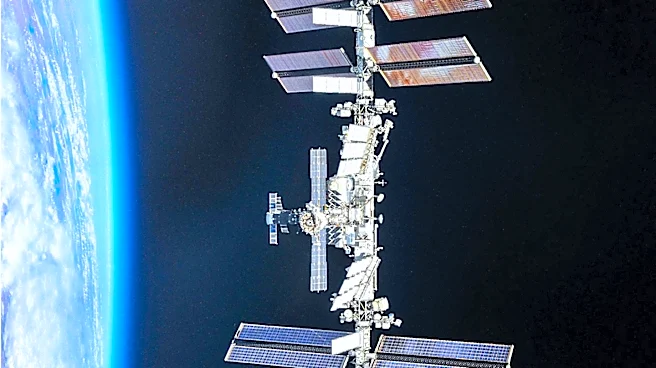
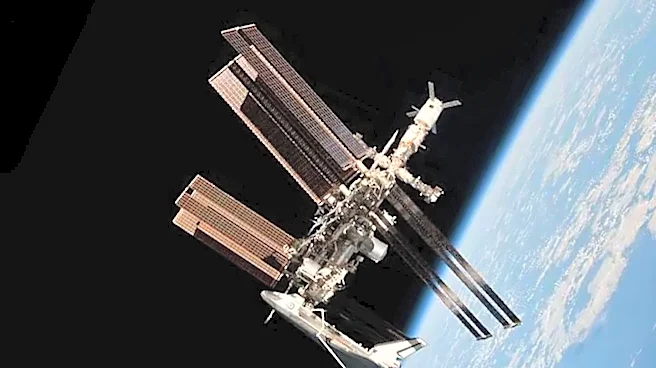
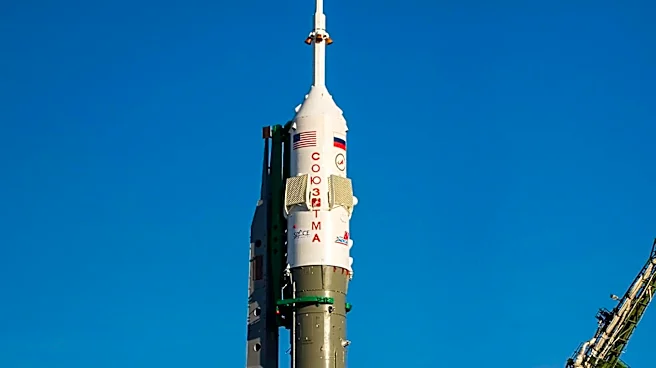
NASA astronaut Anil Menon, along with Russian cosmonauts Pyotr Dubrov and Anna Kikina, is scheduled to launch to the International Space Station (ISS) aboard the Soyuz MS-29 spacecraft. The launch is set for July 14 from the Baikonur Cosmodrome in Kazakhstan.
This mission marks Menon's first spaceflight, while Dubrov and Kikina have previously spent time aboard the ISS. The crew will dock with the ISS after two orbits and join the current team of seven astronauts on the station. Menon, a former SpaceX flight surgeon, will conduct various scientific experiments during the mission, including research on semiconductor crystals and medical procedures using augmented reality and artificial intelligence. The mission is significant as it continues the collaboration between NASA and Roscosmos, despite geopolitical tensions.
Why It's Important?
The launch of the Soyuz MS-29 is a critical demonstration of international cooperation in space exploration, particularly between the United States and Russia. This mission underscores the ongoing partnership between NASA and Roscosmos, which remains vital for the continued operation and research aboard the ISS. The scientific experiments conducted by Menon could have significant implications for future space missions, potentially reducing the need for Earth-based medical support and advancing technology for high-performance computing and medical devices. The mission also highlights the increasing role of private companies like SpaceX in space exploration, as Menon and Kikina have both been involved with SpaceX missions.
What's Next?
Following the successful launch and docking, the crew will spend approximately eight months aboard the ISS. During this time, they will conduct a range of scientific experiments and contribute to the station's ongoing research objectives. The results of Menon's experiments could influence future mission planning, particularly in terms of medical support and technology development for long-duration spaceflights. The mission's success may also impact future collaborations between NASA and Roscosmos, as well as the involvement of private companies in international space missions.