






What's Happening?
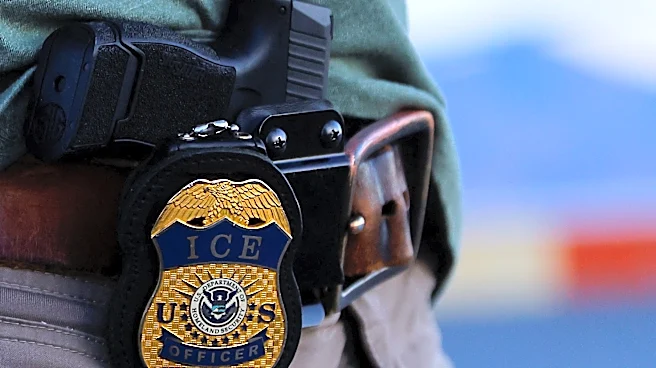
Harris County District Attorney Sean Teare and Sheriff Ed Gonzalez announced the indictment of ICE officer Mario Alberto Morales on a charge of aggravated assault with a deadly weapon. The indictment stems from an incident where Morales allegedly hit
a man with his SUV during an immigration operation. The Harris County District Attorney's office presented surveillance footage, the officer's body camera recording, and portions of his 911 call to the grand jury, which led to the indictment. While the recordings are central to the prosecution's allegations, both ICE and Morales's attorney dispute the claims. Morales is presumed innocent until proven guilty in court, as the indictment itself is not a determination of guilt.
Why It's Important?
This indictment is significant as it involves a federal law enforcement officer facing serious criminal charges at the local level. It highlights the scrutiny and accountability that law enforcement, including federal agents, can face from local jurisdictions. The case could influence public perception of ICE operations and the conduct of its officers, particularly in communities with high immigrant populations. The use of surveillance and body camera footage as key evidence underscores the increasing role of technology in police accountability. The outcome of this trial could set a precedent for how federal agents are prosecuted for actions taken during official duties, potentially impacting inter-agency relations and the legal protections afforded to federal officers.
What's Next?
Officer Morales will proceed through the legal system, with his legal team expected to continue arguing that the case is politically motivated. The trial will involve the presentation of evidence, including the surveillance and body camera footage, and witness testimonies. The defense will likely challenge the interpretation of the events and the intent behind Morales's actions. The case will be closely watched by legal professionals, civil rights advocates, and law enforcement agencies, as its resolution could have broader implications for police conduct and accountability. The legal process will determine whether the evidence presented is sufficient to prove guilt beyond a reasonable doubt.
Beyond the Headlines
This case delves into the complex intersection of immigration enforcement, local criminal justice, and the use of force by federal agents. The defense's claim of political motivation adds another layer of complexity, suggesting potential tensions between federal and local authorities regarding immigration policies and enforcement practices. The incident raises ethical questions about the appropriate use of vehicles during law enforcement operations and the responsibility of officers to ensure public safety. Culturally, the case may further fuel debates about immigration policies and the treatment of individuals during immigration operations, particularly in border states like Texas. The outcome could influence training protocols for federal agents and contribute to ongoing discussions about police reform and accountability across the nation.