






What's Happening?
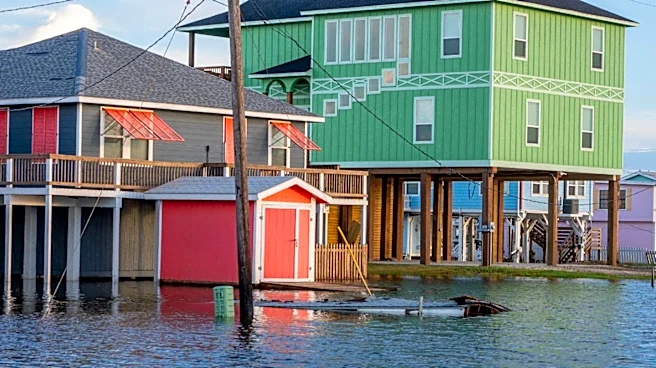
A federal policy, specifically related to the Federal Emergency Management Agency (FEMA) flood insurance, is inadvertently incentivizing homeowners in coastal areas to let their properties collapse into the water rather than proactively remove them. This
issue is particularly evident in places like Dare County, N.C., where over 30 homes have collapsed since 2020, and approximately 100 more are threatened by erosion exacerbated by sea level rise. Homeowners often find themselves with no financial alternative but to wait for their homes to be destroyed to receive insurance payouts. This practice leads to significant amounts of debris and pollution, closing beaches, threatening wildlife, and necessitating costly taxpayer-funded cleanup efforts.
Why It's Important?
This federal policy creates a perverse incentive that has substantial environmental and economic consequences for U.S. coastal communities. The accumulation of debris from collapsing homes pollutes vital ecosystems, harms marine life, and degrades recreational areas, impacting local economies reliant on tourism and fishing. Taxpayers bear the burden of expensive cleanup operations, diverting funds that could be used for proactive coastal resilience measures. Furthermore, the policy discourages responsible land management and adaptation to climate change, as it financially penalizes homeowners who might otherwise choose to relocate or demolish their threatened properties before they become environmental hazards. This situation highlights a critical flaw in current federal disaster preparedness and insurance mechanisms, undermining efforts to protect coastal communities and natural resources.
What's Next?
The problem is expected to worsen as climate-driven sea level rise accelerates erosion across the country. There is growing alarm among waterfront homeowners, local officials, and members of Congress regarding the unsustainability of the current status quo. The immediate next step involves a critical discussion among policymakers to reform FEMA's flood insurance program to remove these perverse incentives. Potential solutions could include offering financial assistance for planned relocation or demolition of at-risk properties, or adjusting insurance payouts to encourage proactive measures. The challenge lies in finding a long-term solution that balances financial responsibility, environmental protection, and equitable treatment for affected homeowners, while also addressing the broader implications of climate change on coastal communities.
Beyond the Headlines
This issue extends beyond mere policy mechanics, touching on the complex interplay between human settlement, natural processes, and government intervention. It exposes a societal reluctance to confront the long-term implications of climate change and adapt to a changing environment. The current policy inadvertently fosters a reactive rather than proactive approach to coastal management, leading to greater costs and environmental damage in the long run. Ethically, it raises questions about the responsibility of government to protect both its citizens and the environment, and whether current frameworks adequately address the moral hazard created by insurance systems in the face of climate change. Culturally, it challenges the traditional notion of property rights and the expectation of perpetual occupancy in dynamic coastal zones, potentially necessitating a re-evaluation of how communities interact with and adapt to their natural surroundings.