

What's Happening?
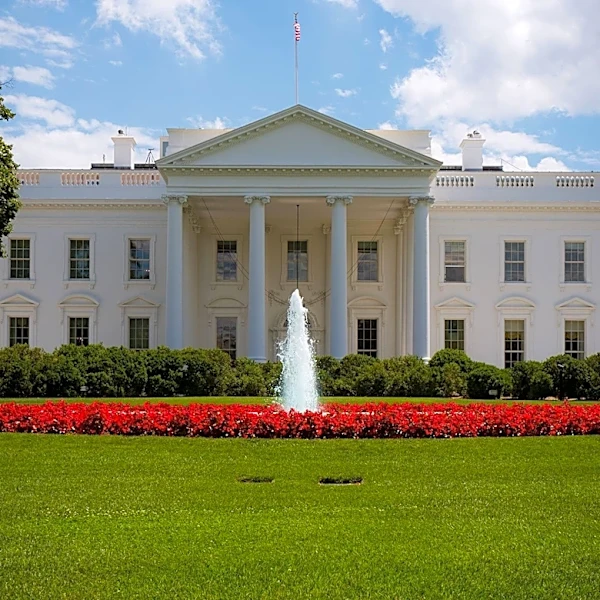
The Supreme Court has issued a temporary order allowing President Trump to continue construction on a new ballroom at the White House, effectively pausing a lower court ruling that would have mandated a halt to the project. This administrative stay, issued by
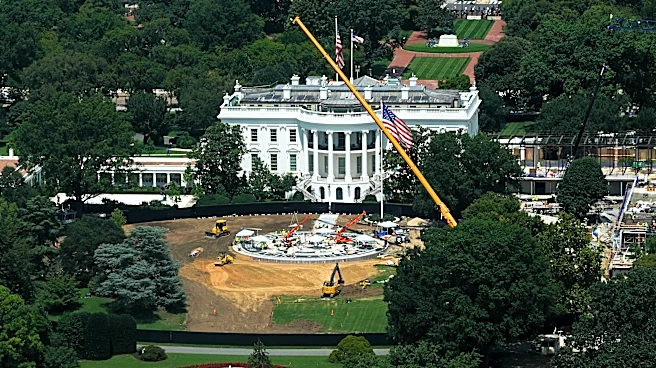
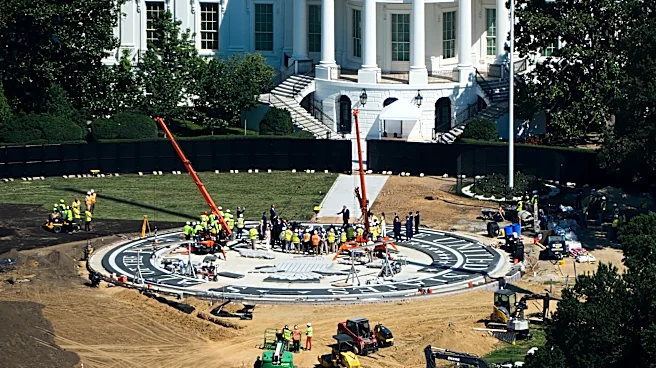
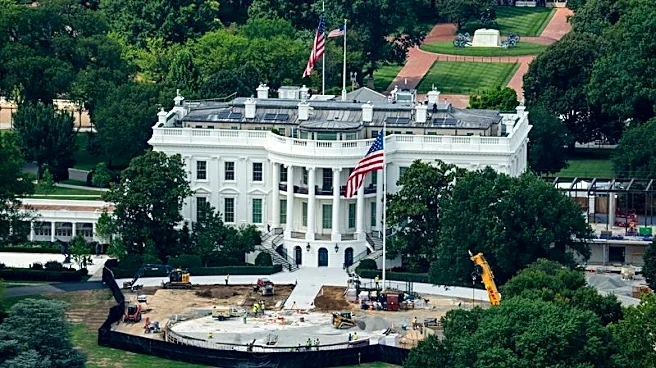
Chief Justice John Roberts, does not address the legality of the project itself, which two lower courts have deemed unlawful due to the absence of congressional approval. The order is intended to provide the justices with additional time to consider President Trump's request for an indefinite pause on adverse rulings. According to filings from the Trump administration, construction is rapidly progressing, with a 250-person crew working 20-hour days, seven days a week, and the complex is reported to be 65% complete. The project's cost has escalated from an initial estimate of $200 million to approximately $400 million, with some reports suggesting the total cost for various White House complex changes could reach $900 million.
Why It's Important?
This temporary ruling underscores the ongoing legal and political battle over presidential authority and the use of federal funds for White House renovations. The core issue revolves around whether the President can undertake such a significant construction project without explicit congressional approval, challenging the traditional balance of power. The administration's evolving justifications, from personal legacy to national security concerns, highlight the contentious nature of the project. The rapid pace of construction, even amidst legal challenges, suggests an attempt to complete the project before a definitive legal judgment can be rendered, potentially creating a fait accompli. This situation could set a precedent for how future administrations approach large-scale projects on federal property, potentially diminishing congressional oversight and the role of historic preservation groups. The increasing cost of the project also raises questions about fiscal responsibility and transparency in government spending.
What's Next?
The administrative stay issued by Chief Justice Roberts does not set a new deadline, allowing construction to continue until the Supreme Court issues a more definitive order. The case will likely be referred to the full nine-justice court for a comprehensive review of the legal arguments. The Supreme Court will need to determine the legality of the project, specifically addressing the need for congressional approval and the standing of the National Trust for Historic Preservation to challenge the construction. The administration's arguments regarding national security and the President's authority to renovate the White House will be central to the court's deliberations. Depending on the Supreme Court's final decision, the project could be permanently halted, allowed to proceed with or without conditions, or lead to a re-evaluation of the scope of presidential power concerning federal property renovations. The outcome will have significant implications for future executive branch projects and the checks and balances within the U.S. government.
Beyond the Headlines
The controversy surrounding the White House ballroom project extends beyond legal and political considerations, touching upon the symbolic integrity of the 'People's House.' President Trump's personal investment in remaking parts of Washington, including the White House, reflects a broader assertion of presidential will and a desire to leave a tangible legacy. The destruction of the East Wing to make way for the ballroom has drawn criticism from both sides of the political spectrum, highlighting concerns about historical preservation and the appropriate use of a national landmark. The debate also brings to light the tension between a president's vision for the executive residence and the public's expectation of its historical and architectural preservation. The use of a specific type of concrete, described as 'nearly impossible to deconstruct,' suggests a deliberate effort to ensure the permanence of the project, regardless of future legal or political shifts. This aspect raises ethical questions about irreversible changes to national heritage and the potential for executive actions to bypass long-term public and legislative consensus.