
What's Happening?
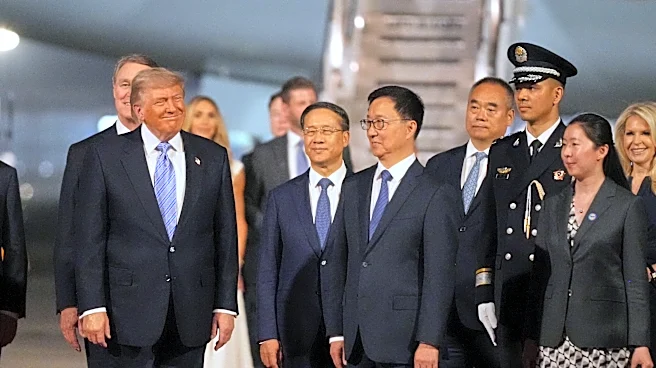
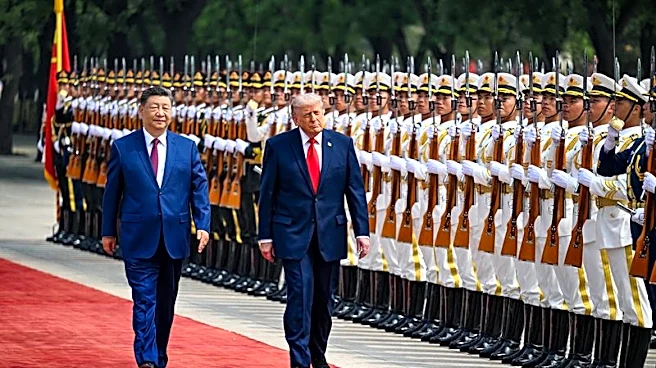
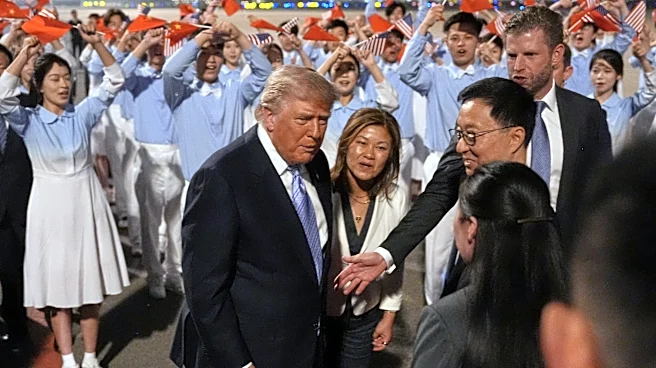
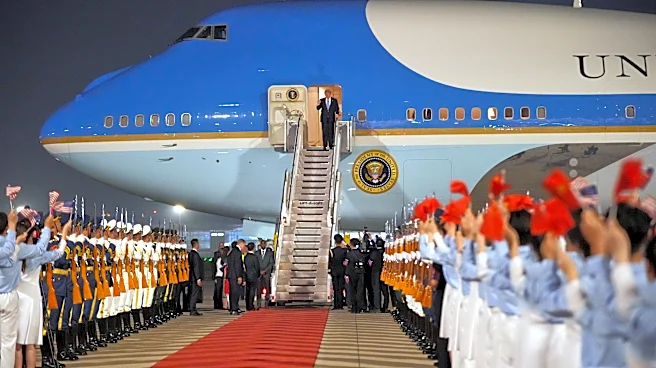
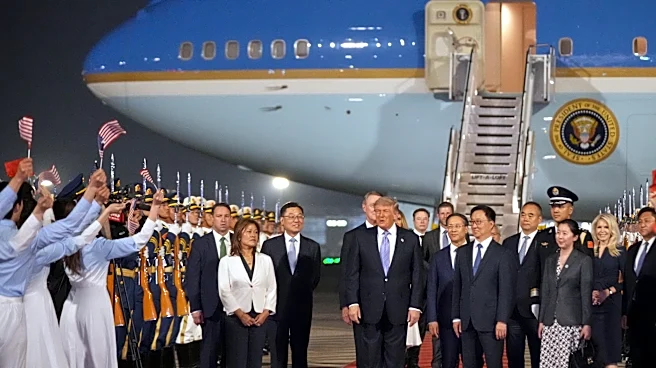
President Trump and Chinese President Xi Jinping commenced a two-day summit in Beijing, marked by a grand welcome ceremony at the Great Hall of the People. The summit, which includes discussions on critical
issues such as trade relations, the U.S. war in Iran, and Taiwan, aims to stabilize the complex relationship between the two superpowers. The event featured a military honor guard and a state banquet, underscoring the ceremonial importance of the meeting. Despite the contentious agenda, both leaders expressed a desire for cooperation, with President Trump praising the Chinese display of power and expressing respect for China's achievements.
Why It's Important?
The summit is significant as it addresses several pressing issues that impact global stability and U.S.-China relations. The discussions on trade could influence economic policies and market access for American businesses in China, potentially affecting industries reliant on international trade. The focus on Taiwan highlights geopolitical tensions, with China's stance on reunification posing a risk of conflict. Additionally, the dialogue on Iran and the Strait of Hormuz underscores the strategic importance of energy security and the potential for collaboration or conflict in the region. The outcomes of this summit could shape future diplomatic and economic interactions between the U.S. and China.
What's Next?
Following the summit, both nations are expected to continue negotiations on the discussed issues, with potential policy adjustments based on the agreements reached. The U.S. may seek to expand market access for its businesses in China, while China could increase its purchase of American agricultural products. The handling of Taiwan and the Strait of Hormuz will likely remain focal points in future diplomatic engagements. Observers will watch for any shifts in U.S. policy towards Taiwan and the impact of these discussions on global trade and security dynamics.
Beyond the Headlines
The summit highlights the delicate balance of power and diplomacy in U.S.-China relations. The emphasis on ceremonial displays and personal rapport between the leaders suggests an attempt to project stability and cooperation despite underlying tensions. The involvement of U.S. business leaders and the focus on economic cooperation reflect the intertwined nature of the two economies. The summit's outcomes could influence not only bilateral relations but also broader international alliances and economic strategies, as both nations navigate their roles in a rapidly changing global landscape.