










What's Happening?
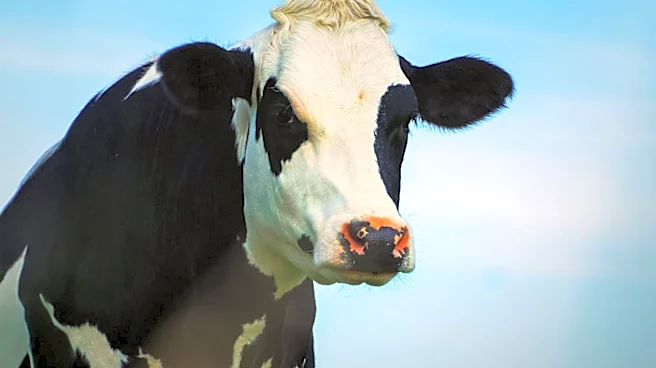
The New World screwworm, a parasite not seen in the United States for decades, has resurfaced, posing a significant threat to livestock, particularly in the southwestern U.S. The parasite's larvae, which consume living tissue, have been found in cattle,
raising concerns among meat producers and consumers. Despite fears, public health officials assure that the screwworm does not pose a direct threat to food safety, as it is unlikely to contaminate meat products. The Dallas Federal Reserve estimates the economic impact could reach billions, primarily due to potential increases in beef prices. The screwworm's presence is concerning for livestock health, but rigorous inspection processes are in place to prevent affected animals from entering the food supply.
Why It's Important?
The reemergence of the New World screwworm could have significant economic implications, particularly for the beef industry, which is already experiencing high prices. The potential for increased costs could affect consumers nationwide, leading to higher prices for beef products. The situation underscores the importance of maintaining robust animal health monitoring and inspection systems to protect the food supply. Additionally, the economic strain on livestock producers could have broader impacts on the agricultural sector, affecting jobs and local economies dependent on cattle farming.
What's Next?
Efforts are underway to control and eradicate the screwworm population, with awareness campaigns and educational materials being distributed in affected areas like Texas and New Mexico. Hunters and livestock owners are being advised to report any suspected infestations to authorities. The U.S. Department of Agriculture continues to monitor the situation closely, ensuring that any infested animals are identified and treated before they can impact the food supply. Ongoing research and collaboration with international partners may be necessary to prevent further spread and to develop long-term solutions.