
What's Happening?
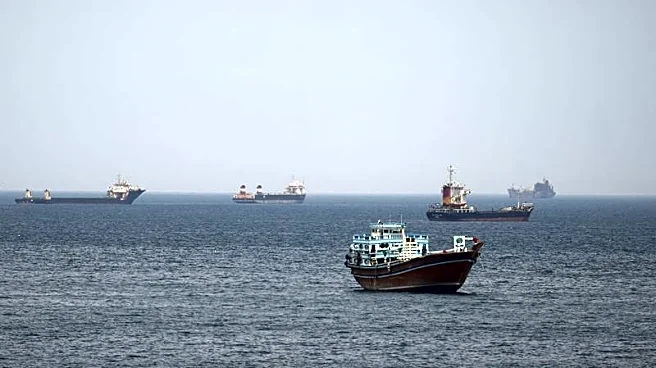
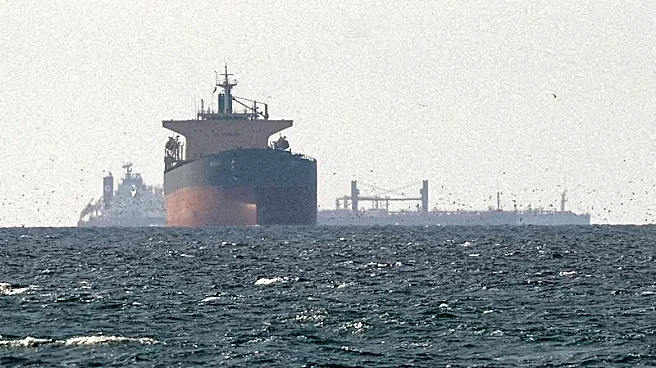
Iran has proposed a toll of $2 million per tanker for ships passing through the Strait of Hormuz, a critical chokepoint for global oil transportation. This move is part of a broader strategy by Iran to exert
control over the strait, which has been a focal point in recent US-Iran peace talks. The toll is intended to fund reconstruction efforts in Iran, but it has been met with international criticism, particularly from Washington DC. The proposal includes a requirement for tankers to provide detailed information about their cargo and ownership before passage, with the toll payable in Chinese yuan or cryptocurrency. This plan has raised legal questions, as it conflicts with the UN Convention on the Law of the Sea, which guarantees unimpeded transit through international straits.
Why It's Important?
The imposition of a toll on the Strait of Hormuz could significantly impact global oil prices, as the strait is a vital route for oil exports from the Middle East. The additional cost of $1 per barrel could add $20 million daily to global oil costs, potentially leading to sustained higher prices. This could affect energy markets worldwide, with analysts predicting that oil prices could remain elevated for an extended period. The toll could also deter shipping companies due to increased risks and insurance costs, further complicating the global oil supply chain. For Iran, the toll could provide much-needed revenue to support its economy and military, but it risks escalating tensions with countries reliant on the strait for oil transport.
What's Next?
The international community, particularly countries dependent on Middle Eastern oil, may seek diplomatic solutions to address the potential economic impact of Iran's toll proposal. The US and its allies might increase pressure on Iran to adhere to international maritime laws. Additionally, shipping companies and oil traders will likely reassess their routes and strategies to mitigate risks associated with the toll. The situation could lead to further negotiations or sanctions, depending on Iran's actions and the global response.
Beyond the Headlines
Iran's toll proposal highlights the geopolitical significance of the Strait of Hormuz and the broader implications of regional power dynamics. The move underscores Iran's strategic use of its geographic position to influence global markets and assert its interests. It also raises questions about the effectiveness of international maritime law and the potential for similar actions by other nations controlling key trade routes. The situation could prompt a reevaluation of global energy security strategies and the diversification of oil supply sources.