
What's Happening?
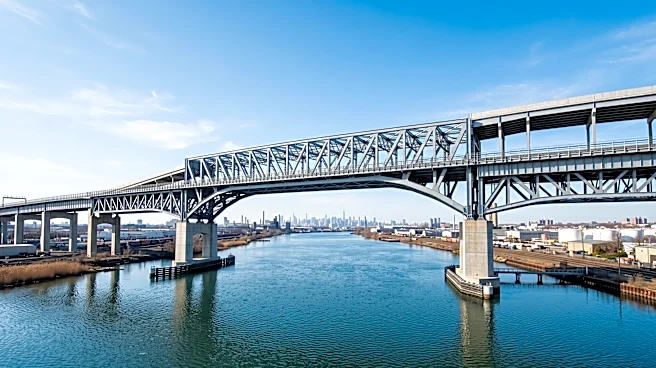
The new Portal North Bridge, a critical component of the Gateway Program, has officially reopened over the Hackensack River, marking the completion of a multi-year construction project. This new bridge
replaces the 116-year-old Portal Bridge, which was notorious for frequent malfunctions and significant train delays for NJ Transit and Amtrak commuters. The original bridge, built in 1910, was a swing bridge that had to open for river traffic, often getting stuck and causing major disruptions. The new Portal North Bridge is a higher, fixed-span structure, meaning it will no longer need to open for marine vessels, thus eliminating a primary cause of past delays. NJ Transit President and CEO Kris Kolluri stated that the bridge is "permanently closed" to opening. The project's final phase, which began last month, caused major service changes, including the rerouting of approximately 30,000 daily riders who had to transfer to other modes of transport to reach New York's Penn Station. With the new bridge now operational, service has returned to normal, promising improved reliability and increased capacity along the Northeast Corridor, the nation's busiest train corridor.
Why It's Important?
The reopening of the Portal North Bridge is a monumental achievement for regional transportation infrastructure, particularly for the millions of commuters in New Jersey and New York. The previous Portal Bridge was a choke point, causing chronic delays that impacted economic productivity, commuter quality of life, and the overall efficiency of the Northeast Corridor. This new fixed-span bridge is expected to significantly enhance the reliability and capacity of train services, which is crucial for a region that relies heavily on public transit. Improved punctuality will benefit businesses by ensuring employees arrive on time and goods are transported efficiently. For individual commuters, it means less stress, more predictable travel times, and potentially more time for personal activities. The project also represents a substantial investment in modernizing aging infrastructure, setting a precedent for future large-scale transportation initiatives. The successful completion of such a complex project, despite the disruptions it caused, demonstrates a commitment to addressing long-standing transportation challenges in one of the most densely populated and economically vital corridors in the U.S.
What's Next?
With the Portal North Bridge now fully operational, the immediate next step is the full restoration of normal train services for NJ Transit and Amtrak along the Northeast Corridor. Commuters can expect a significant reduction in delays and improved travel predictability. The success of this project is also expected to build momentum for other components of the broader Gateway Program, which aims to modernize and expand the rail infrastructure between Newark, New Jersey, and New York City. This includes the construction of new Hudson River tunnels, a project that is even larger and more complex than the Portal North Bridge. The positive outcome of this bridge replacement could serve as a model and provide political will and funding impetus for these subsequent phases. Stakeholders, including state and federal transportation agencies, local governments, and commuter advocacy groups, will likely monitor the long-term performance of the new bridge to ensure it delivers on its promises of enhanced reliability and capacity, potentially influencing future infrastructure investment decisions.
Beyond the Headlines
The completion of the Portal North Bridge project transcends its immediate impact on commuter travel, symbolizing a broader shift in how the U.S. approaches critical infrastructure development. For decades, the aging Portal Bridge was a stark reminder of deferred maintenance and underinvestment in public works. Its replacement signifies a renewed commitment to modernizing essential transportation networks, which is vital for economic competitiveness and quality of life. This project also highlights the intricate challenges of urban infrastructure development, involving complex engineering, significant financial investment, and managing public disruption during construction. The success of the Portal North Bridge could foster greater public confidence in large-scale infrastructure projects and encourage bipartisan support for future initiatives. Furthermore, the shift to a fixed-span bridge reflects evolving engineering solutions that prioritize long-term reliability and efficiency over older designs, setting a new standard for future bridge constructions in busy corridors. This development is a testament to the resilience and adaptability required to maintain and upgrade the backbone of a modern economy.