







What's Happening?
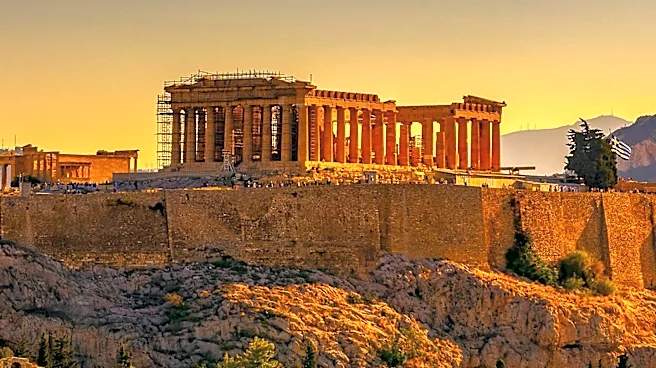
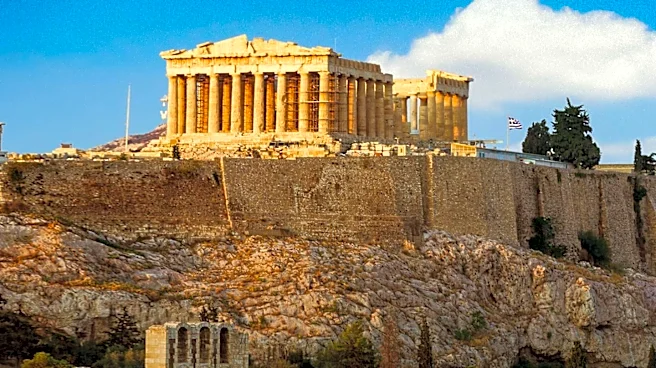
Visitors to the Acropolis in Athens, Greece, are advised to take significant precautions due to extreme summer temperatures that frequently exceed 35°C (95°F). The site, which includes the Parthenon, Erechtheion, Propylaea, and Temple of Athena Nike,
offers minimal shade and features uneven stone paths and steep stairs. To mitigate the risks associated with the heat, it is recommended that individuals visit early in the morning or late in the afternoon. Essential items for visitors include water, sun protection, and a hat. Midday visits during heatwaves are strongly discouraged. The Acropolis is a prominent landmark in Athens, visible across the city from its limestone outcrop, and represents the peak of Classical Greek architecture from the fifth century BCE. The site requires at least two hours to walk through, with additional time needed for the adjacent Acropolis Museum, which is climate-controlled.
Why It's Important?
The guidance for Acropolis visitors during heatwaves highlights the broader impact of extreme weather conditions on tourism and public health, even in international contexts. While this specific advice pertains to Greece, it underscores a growing global concern about managing tourist experiences and ensuring safety in the face of rising temperatures. For U.S. travelers, understanding these precautions is crucial for planning international trips, as similar conditions can be encountered in various popular destinations. The need for such advisories reflects how climate patterns are influencing travel logistics and the operational strategies of major cultural sites worldwide. This situation also emphasizes the economic implications for the tourism sector, as extreme weather can affect visitor numbers and the overall quality of the travel experience, potentially leading to shifts in peak travel seasons or increased demand for climate-controlled attractions.
What's Next?
As global temperatures continue to rise, similar advisories and operational adjustments are likely to become more common at outdoor historical and tourist sites worldwide. Authorities managing such sites may implement more stringent guidelines, including potential restrictions on visiting hours during peak heat, increased availability of water stations, and enhanced medical support on-site. For travelers, this means a greater emphasis on pre-trip research regarding local weather conditions and site-specific recommendations. Tour operators and travel agencies may also need to adapt their itineraries to account for extreme weather, potentially offering more early morning or late afternoon tours, or incorporating more indoor activities during the hottest parts of the day. The long-term trend could see a shift in tourism patterns, with more visitors opting for shoulder seasons to avoid the intense summer heat.
Beyond the Headlines
The challenges faced by the Acropolis due to heatwaves extend beyond immediate visitor safety, touching upon the long-term preservation of ancient monuments. Extreme temperatures and associated weather phenomena, such as increased solar radiation, can accelerate the deterioration of historical structures and artifacts. This raises ethical and practical questions about balancing public access with conservation efforts. Furthermore, the need for such precautions underscores the broader societal adaptation required in response to climate change. It highlights how cultural heritage sites, often symbols of human resilience and achievement, are now vulnerable to environmental shifts, prompting discussions on sustainable tourism practices and the role of international cooperation in protecting these irreplaceable landmarks for future generations. The situation at the Acropolis serves as a microcosm of the global challenge to maintain cultural integrity amidst environmental pressures.