







What's Happening?
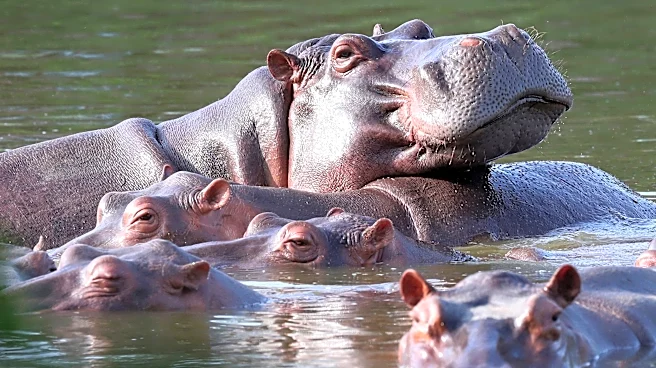
Colombian officials have authorized a plan to cull up to 80 hippos that are descendants of animals originally brought to the country by drug lord Pablo Escobar in the 1980s. These hippos, which have become feral, pose a threat to native species and local
villagers. The decision was made after other population control methods, such as neutering and relocation, proved costly and ineffective. The hippos have been expanding their territory, displacing native species and becoming a danger to humans. Despite their ecological impact, the hippos have also become a tourist attraction, complicating the decision to cull them.
Why It's Important?
The culling of these hippos highlights the complex challenges of managing invasive species that have become integrated into local ecosystems. While the hippos pose a significant threat to Colombia's biodiversity, they also represent a unique tourist attraction that benefits local economies. The decision to cull them has sparked controversy, with animal rights activists opposing the move and calling for non-lethal solutions. This situation underscores the difficulties in balancing ecological preservation with economic and ethical considerations.
Beyond the Headlines
The decision to cull the hippos raises ethical questions about human responsibility for managing wildlife populations that have resulted from past human actions. It also reflects broader issues of how countries deal with invasive species and the long-term impacts of historical decisions. The controversy surrounding the culling could influence future policies on wildlife management and conservation efforts, both in Colombia and internationally.