




What's Happening?
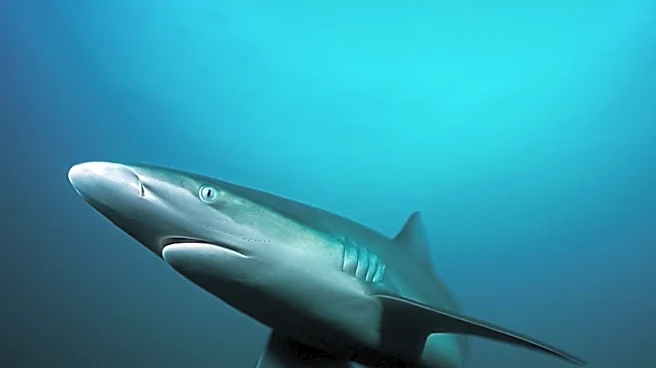
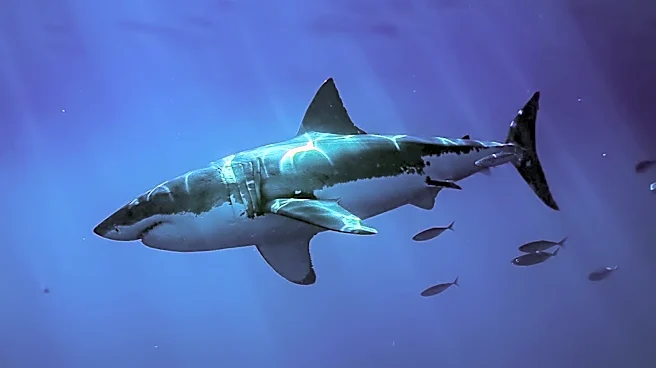
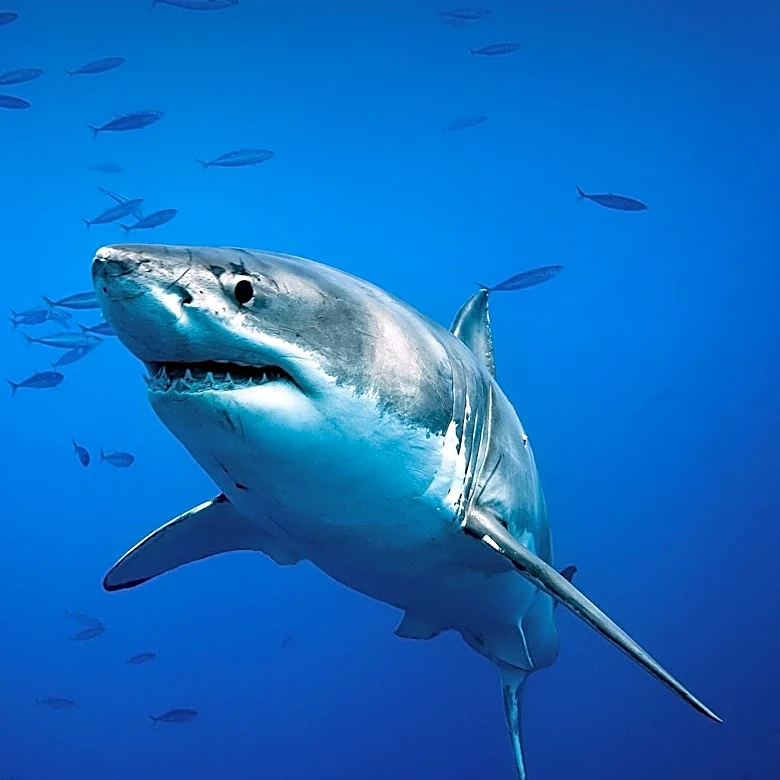
Off the coast of South Africa, orcas have developed a precise hunting technique targeting great white sharks, focusing on extracting the sharks' livers. This behavior, first recorded in 2015, involves orcas seizing a shark's pectoral fin and eviscerating
it in under two minutes to access the liver, which is rich in energy. The phenomenon has been documented through various studies and observations, with researchers noting that the presence of orcas leads to a significant decline in local shark populations. The behavior is not limited to a few orcas, as similar patterns have been observed in other regions, suggesting a learned behavior that could spread among orca populations.
Why It's Important?
The orcas' hunting behavior has significant ecological implications, potentially altering marine ecosystems by reducing shark populations. Sharks play a crucial role in maintaining the balance of marine environments, and their decline could have cascading effects on the ecosystem. The behavior also raises questions about the adaptability and intelligence of orcas, as they demonstrate the ability to develop and share complex hunting strategies. This situation highlights the dynamic nature of predator-prey relationships and the potential for rapid changes in marine biodiversity. Understanding these interactions is essential for marine conservation efforts and managing the impact of such behaviors on ocean ecosystems.