




What's Happening?
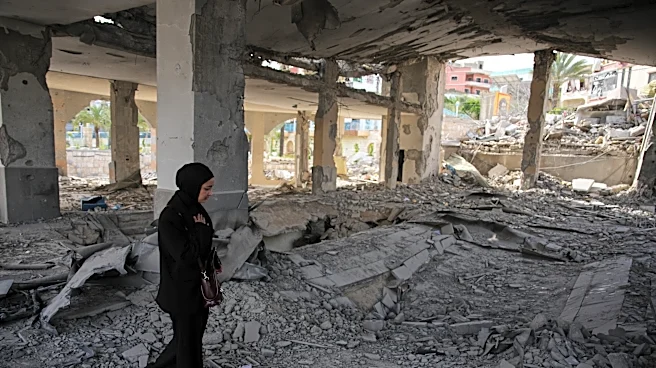
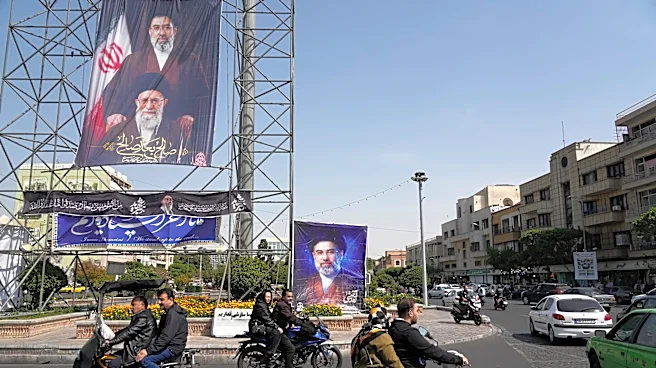
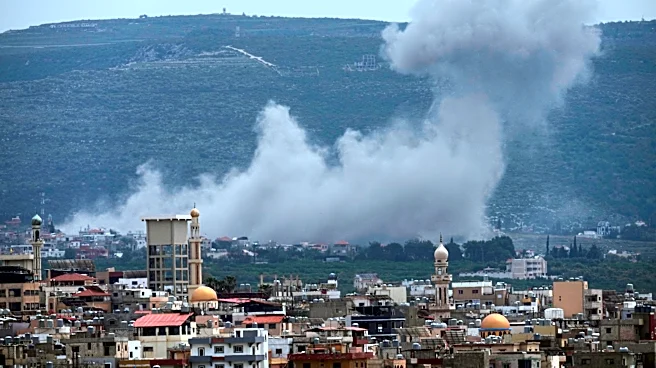
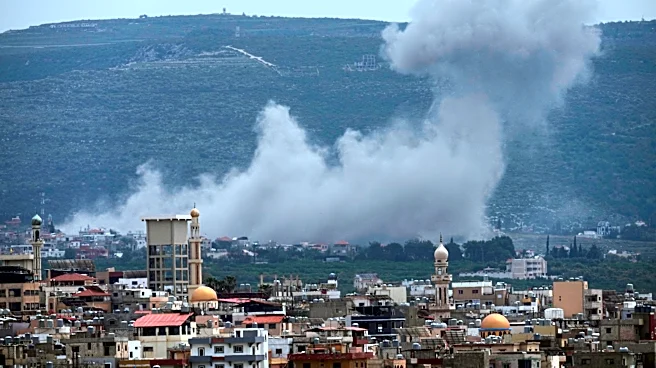
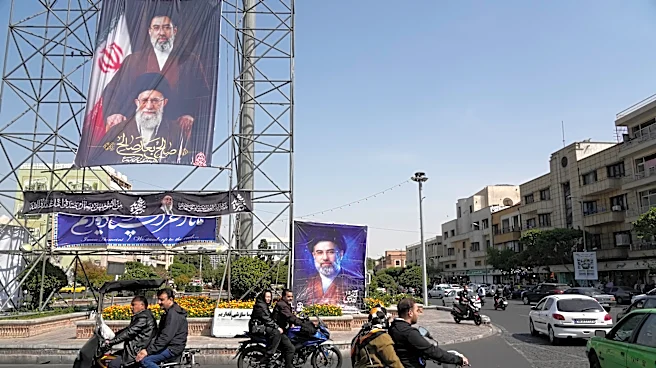
A ceasefire agreement between Israel and Lebanon has been brokered by President Trump, aiming to address ongoing tensions involving Hezbollah. The ceasefire, announced via social media, was reportedly pushed through by the U.S. due to complications in the truce
with Iran. This development has sparked mixed reactions within Israel, with some leaders expressing frustration over the lack of communication and involvement in the decision-making process. The U.S. has expressed a commitment to actively lead efforts to disarm Hezbollah, with plans to use American resources to achieve this goal. President Trump has also invited Israeli Prime Minister Benjamin Netanyahu and Lebanese President Joseph Aoun to the White House for talks, marking the first significant dialogue between the two nations since 1983.
Why It's Important?
The ceasefire and potential disarmament of Hezbollah are significant for regional stability and U.S. foreign policy. The involvement of the U.S. in leading disarmament efforts indicates a shift towards a more active role in Middle Eastern conflicts, potentially altering power dynamics in the region. For Israel, the disarmament of Hezbollah could mean a reduction in threats from the north, while for Lebanon, it could lead to internal stability and improved relations with Israel. The success of these efforts could set a precedent for U.S. involvement in similar conflicts, impacting international relations and security strategies.
What's Next?
The upcoming talks at the White House between Netanyahu and Aoun will be crucial in determining the future of the ceasefire and disarmament efforts. The success of these talks will depend on Lebanon's commitment to confronting Hezbollah and the effectiveness of U.S. involvement. Additionally, the international community, particularly European countries, may play a role in supporting these efforts. The outcome of these discussions could influence future U.S. foreign policy and its approach to conflict resolution in the Middle East.
Beyond the Headlines
The ceasefire highlights the complex nature of international diplomacy and the challenges of balancing national interests with global security concerns. The U.S.'s role in the ceasefire and disarmament efforts raises questions about sovereignty and the influence of external powers in regional conflicts. The situation also underscores the importance of transparent communication and collaboration among nations to achieve lasting peace.