







What's Happening?
Representative Jared Golden, a Democrat from Maine, is a co-sponsor of a bill that seeks to reduce the timeframe for legal challenges against energy projects. This legislation, known as the SPEED Act, was passed by the House in December 2025 and proposes
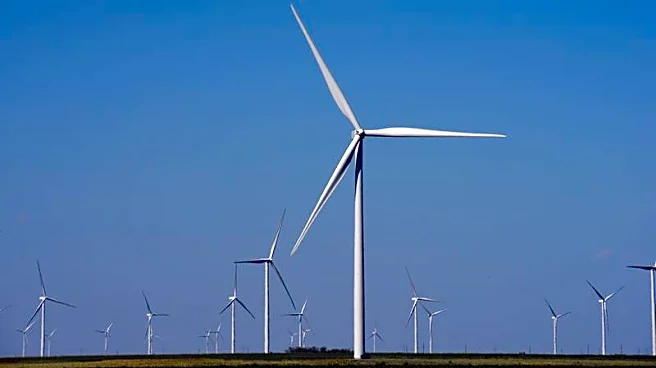
a 150-day limit for lawsuits filed under federal environmental and historic review laws. Currently, opponents of energy projects have up to six years to file legal challenges under the National Environmental Policy Act (NEPA). The proposed deal, which Senate negotiators are working on, would significantly shorten this period. The Congressional Progressive Caucus previously opposed the House version of the bill, arguing that a 150-day window is 'unreasonably short.' The bill would require passage in both the Senate and the House, and presidential approval, to become law. President Trump has reportedly offered to ease administrative delays on wind and solar projects to gain Democratic support for such a deal.
Why It's Important?
This legislative effort is significant for the U.S. energy sector and environmental policy. The current six-year window for legal challenges under NEPA has been identified as a major factor in delaying energy projects. A Breakthrough Institute review found that lawsuits under NEPA delayed energy projects by an average of 3.9 years between 2013 and 2022, despite federal agencies winning 71% of these cases. Shortening this period to 150 days could accelerate the development and implementation of various energy initiatives, potentially boosting economic activity and energy independence. However, it also raises concerns among environmental groups and other opponents of energy projects, who argue that a shorter window could limit their ability to adequately challenge projects with potential negative environmental or historical impacts. The involvement of President Trump in offering concessions on renewable energy projects highlights the bipartisan, albeit complex, nature of energy policy discussions.
What's Next?
Senate negotiators are expected to release the full text of their permitting deal this week, though a vote is unlikely before the Senate's recess for midterm elections. The bill will need to navigate both chambers of Congress and secure presidential approval to become law. The outcome will depend on the ability of negotiators to bridge the divide between those advocating for faster project development and those prioritizing environmental and community protections. The reported offer from President Trump to ease administrative hurdles for wind and solar projects suggests a potential path for bipartisan compromise, but the details of such an agreement and its reception by various stakeholders will be crucial. The debate will likely continue to focus on balancing economic development and energy security with environmental stewardship.
Beyond the Headlines
The push to streamline permitting for energy projects reflects a broader tension in U.S. policy between economic growth and environmental protection. While proponents argue that lengthy review processes and litigation hinder critical infrastructure development and increase costs, critics contend that these processes are essential for ensuring public accountability and preventing irreversible environmental damage. The proposed changes could shift the balance of power in favor of developers, potentially leading to faster project approvals but also raising questions about the thoroughness of environmental impact assessments. This debate also touches upon the role of non-governmental organizations, which were responsible for a significant portion of energy-related lawsuits in the past. The long-term implications could include a more rapid transformation of the U.S. energy landscape, but also increased scrutiny of regulatory oversight and potential challenges to environmental safeguards.