




What's Happening?
A lawsuit has been filed in U.S. District Court challenging New Hampshire's House Bill (HB) 323, which restricts the types of identification acceptable for voting. The suit, filed by the Concord-based nonprofit voting rights group the Coalition for Open
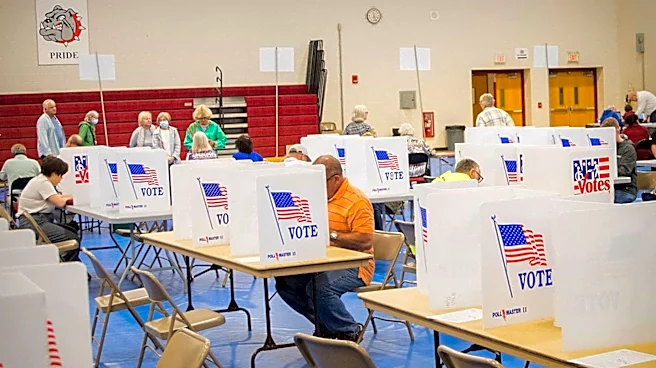
Democracy, aims to preserve the use of high school and college-issued IDs for voting purposes. HB 323, signed into law by Gov. Kelly Ayotte in June, has altered voting requirements, making it different from previous years. The Coalition for Open Democracy argues that the Secretary of State’s April 23 directive, which barred student IDs for voter registration, absentee ballots, or checking in at polls, unlawfully extends HB 323. Legal counsel Ben Horton stated that the law did not initially bar students from using IDs to register. The lawsuit highlights concerns that a significant portion of young voters, aged 18-24, may not possess a driver's license, which is now the predominant form of identification for voting after the new law. A motion hearing for the case is scheduled for August 31.
Why It's Important?
This lawsuit is important because it directly impacts voter access and the democratic process in New Hampshire, particularly for young voters. By limiting acceptable forms of identification, HB 323 could disenfranchise a demographic that often relies on student IDs for official purposes. The Coalition for Open Democracy argues that these new restrictions create unnecessary bureaucratic hurdles without enhancing election security, potentially discouraging first-time voters and establishing a pattern of non-voting. The outcome of this legal challenge could set a precedent for voter ID laws in other states, influencing how future elections are conducted and who participates. The debate also touches on the broader issue of balancing election integrity with voter accessibility, a recurring theme in U.S. politics. If the lawsuit is successful, it could restore a crucial identification option for thousands of students, ensuring their continued participation in elections. Conversely, if the law stands, it could lead to reduced youth voter turnout and shift the demographic landscape of the electorate.
What's Next?
The immediate next step is a motion hearing scheduled for August 31 in U.S. District Court, where the legal arguments against HB 323 will be presented. The state is also appealing a separate ruling that restored the right to use a qualified voter affidavit (QVA) for proving citizenship, which will be available for the September 8 primary. Depending on the court's decision regarding student IDs, the Secretary of State's office may need to revise its directives or voter education materials. Political leaders and civil society groups will likely continue to monitor the situation closely, with potential reactions ranging from further legislative action to increased voter registration drives targeting affected populations. Rep. John Sellers, a co-sponsor of HB 323, believes the lawsuit will not succeed unless the legislature shifts to Democratic control, indicating a potential for continued partisan debate on voter ID laws. The long-term implications could include changes in voter registration procedures and increased efforts to provide alternative forms of government-issued identification for young citizens.
Beyond the Headlines
Beyond the immediate legal and political implications, this case highlights a deeper societal shift regarding identity and civic participation. The increasing number of young people who may not obtain a driver's license, coupled with stricter voter ID laws, creates a growing disconnect between traditional identification methods and modern lifestyles. This situation raises ethical questions about the accessibility of democratic processes for all citizens, particularly those in transitional life stages like students. The argument that such restrictions do not enhance election security but rather create roadblocks suggests a potential for voter suppression, even if unintended. Furthermore, the case underscores the ongoing tension between state-level control over elections and federal oversight, as voting rights groups often turn to federal courts to challenge state laws. The outcome could influence how future generations engage with the electoral system, potentially fostering either greater inclusion or increased alienation from political processes.