
What's Happening?
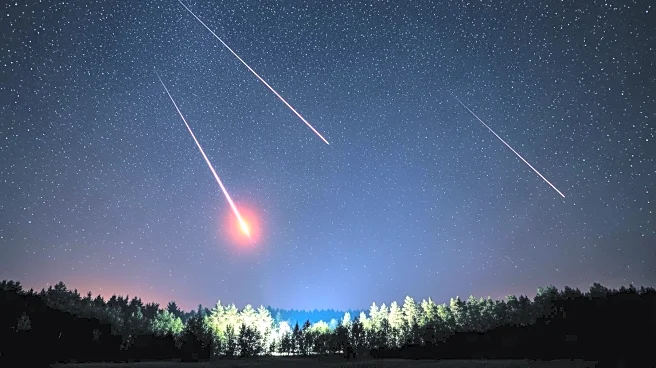
Residents across New York and other East Coast states reported witnessing a bright fireball streaking across the sky on the night of December 7. These sightings were documented by the American Meteor Society.
The event coincides with the ongoing Geminid meteor shower, which is known for its high activity, peaking on December 13 and 14. The Geminid meteor shower, originating from the debris of the rock comet 3200 Phaethon, typically features around 150 meteors per hour. This celestial event has sparked interest among astronomy enthusiasts, with many flocking to observatories across New York State to catch a glimpse of the spectacle. The fireball sightings have added to the excitement, although there is no evidence of any asteroids striking the area.
Why It's Important?
The sightings of the fireball and the Geminid meteor shower have reignited public interest in astronomy and space observation. Such events provide an opportunity for educational engagement and community gatherings at observatories, fostering a greater appreciation for space science. The increased attention can also benefit local observatories and related tourism, as people seek out locations to view these celestial events. Additionally, these occurrences highlight the importance of monitoring near-Earth objects, which can have significant implications for planetary defense strategies.
What's Next?
As the Geminid meteor shower continues through December 24, more sightings are expected, particularly during its peak. Observatories in New York State are likely to see increased visitation as enthusiasts and the general public seek to experience the meteor shower firsthand. This period may also prompt discussions on the need for enhanced monitoring of space objects and potential impacts on Earth. The American Meteor Society and other organizations will continue to collect and analyze reports from observers to better understand these phenomena.
Beyond the Headlines
The fascination with meteor showers and fireballs underscores a broader cultural and scientific interest in space exploration. Events like these can inspire future generations to pursue careers in science, technology, engineering, and mathematics (STEM). They also serve as a reminder of the dynamic nature of our solar system and the ongoing need for research and preparedness in the face of potential asteroid impacts. The public's engagement with these events can drive support for space missions and funding for scientific research.