


What's Happening?
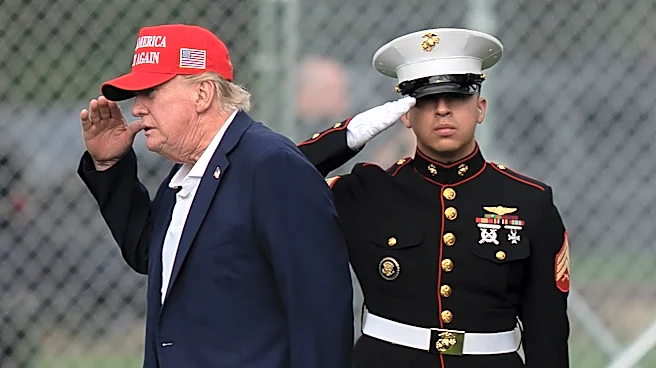
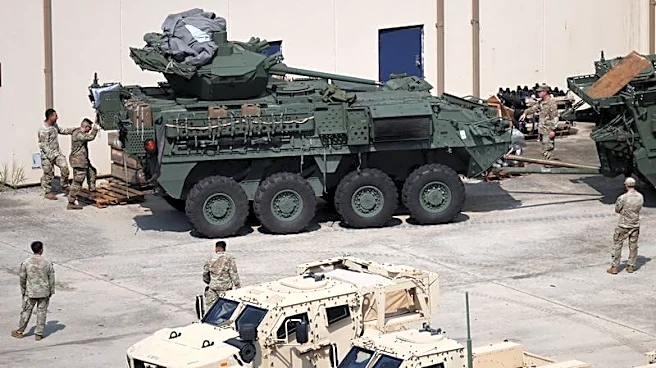
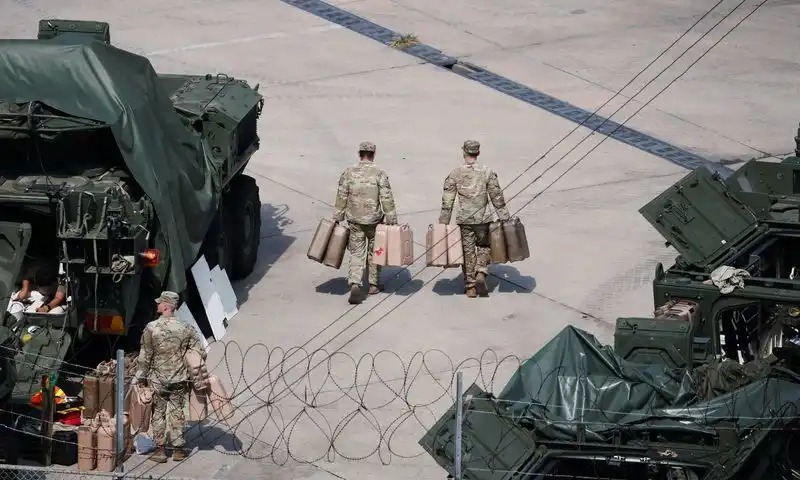
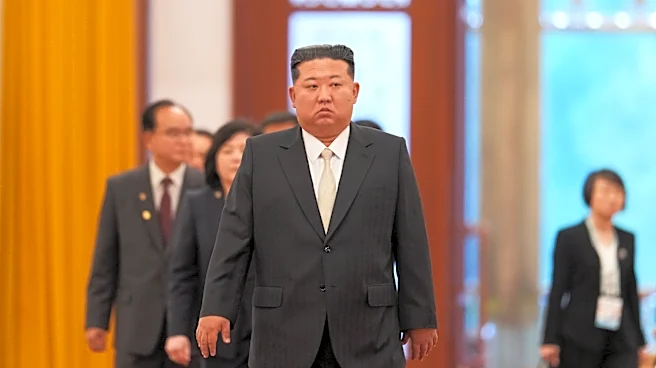
President Trump announced that North Korean leader Kim Jong Un has responded to his outreach, following President Trump's order to scale back joint military exercises with South Korea. This development comes a day after President Trump directed the truncation
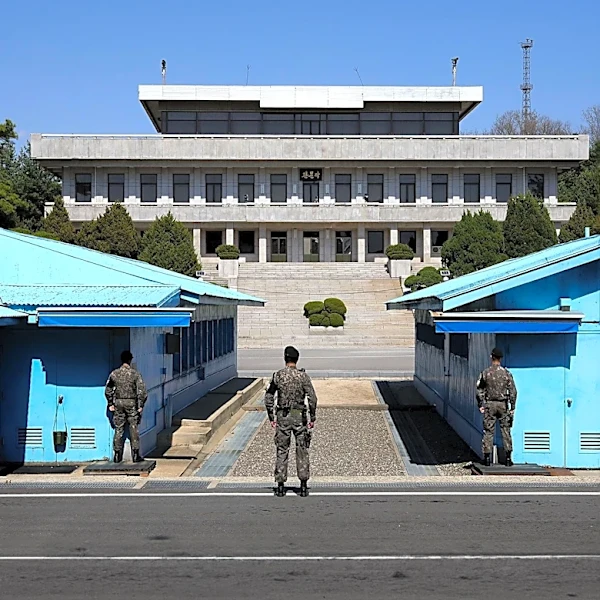
of these drills, a move perceived as an effort to encourage Kim Jong Un to return to negotiations. Speaking at the White House, President Trump stated that he is making the situation on the Korean Peninsula "much safer" by reducing the scale of what he referred to as "war games." President Trump has previously met with Kim Jong Un three times during his first term, becoming the first sitting American president to enter North Korea.
Why It's Important?
President Trump's decision to reduce joint military exercises with South Korea and his subsequent announcement of a response from Kim Jong Un carry significant implications for U.S. foreign policy and regional stability in East Asia. The scaling back of drills, while intended to foster dialogue, has historically been a point of contention, with some U.S. allies expressing concern over potential impacts on deterrence and readiness. For the U.S., this approach reflects a continued effort to engage North Korea diplomatically, prioritizing direct communication over traditional military posturing. The success or failure of this renewed outreach could redefine the U.S. strategy towards denuclearization and peace on the Korean Peninsula, influencing future defense spending, alliance commitments, and the broader geopolitical landscape in a critical region. It also highlights the ongoing debate within U.S. foreign policy circles regarding the most effective means of managing complex international adversaries.
What's Next?
Following President Trump's announcement, the immediate next steps will likely involve further diplomatic exchanges between the U.S. and North Korea to ascertain the nature and sincerity of Kim Jong Un's response. This could potentially lead to a resumption of denuclearization talks, though the format and agenda of such discussions remain to be seen. Major stakeholders, including South Korea and Japan, will closely monitor these developments, as any shift in U.S.-North Korea relations directly impacts their security interests. There may be internal discussions within the U.S. government regarding the balance between diplomatic engagement and maintaining military readiness. The international community will also be watching for signs of concrete steps towards denuclearization or, conversely, any actions that could escalate tensions. The coming weeks and months will be crucial in determining whether this outreach leads to substantive progress or merely a temporary de-escalation.
Beyond the Headlines
President Trump's personal diplomacy with Kim Jong Un, characterized by direct outreach and a willingness to deviate from conventional diplomatic protocols, represents a unique chapter in U.S. foreign policy. This approach challenges the traditional framework of multilateral negotiations and alliance-based pressure, opting instead for a more personalized and transactional style. The long-term implications of such a strategy are profound, potentially setting precedents for how future U.S. administrations engage with challenging adversaries. It also raises questions about the role of presidential temperament and personal relationships in international relations, and whether such an approach can yield sustainable peace or merely temporary concessions. The ongoing dialogue, or lack thereof, will continue to shape perceptions of U.S. leadership and its commitment to its allies, while also influencing the broader global discourse on nuclear proliferation and conflict resolution.