




What's Happening?
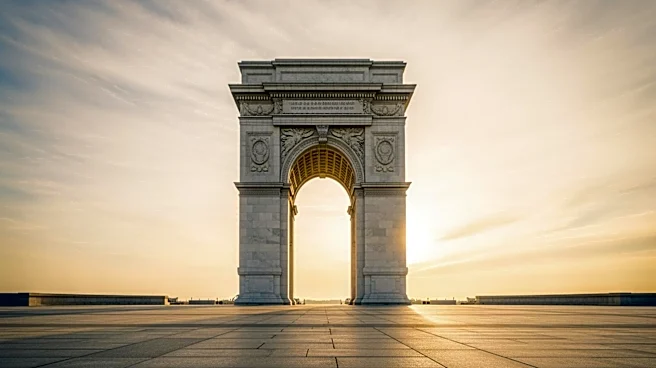
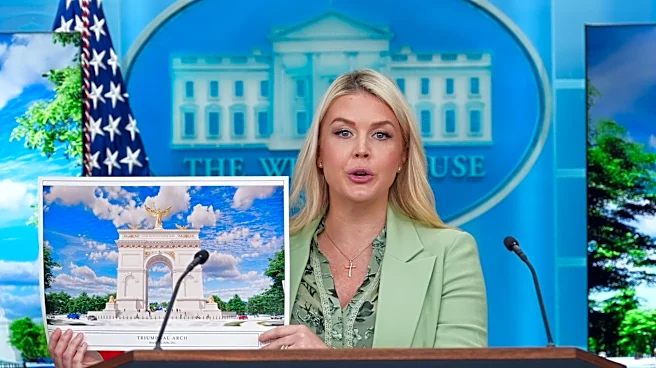
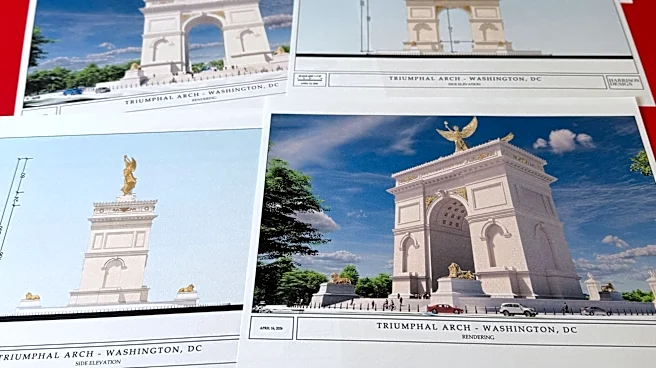
The Commission of Fine Arts has voted to proceed with President Trump's proposal to construct a 250-foot 'victory arch' at the National Mall in Washington, D.C. The arch, designed by Harrison Design, resembles Paris' Arc de Triomphe but is significantly
taller. The commission, filled with Trump appointees, advises on design and aesthetics for federal construction projects. The arch's design includes eagles and a winged figure, with inscriptions 'One Nation Under God' and 'With Liberty and Justice for All.' Despite public opposition, the arch aims to honor American veterans and commemorate the nation's 250th anniversary.
Why It's Important?
The approval of the victory arch is a significant development in U.S. cultural and political landscapes. It reflects President Trump's influence on federal agencies and his vision for national monuments. The arch's construction could impact Washington, D.C.'s architectural heritage and tourism, potentially drawing visitors to the area. However, the project faces criticism for its size and potential obstruction of historical sightlines. The decision highlights ongoing debates about presidential authority and public input in national projects, raising questions about the balance between honoring history and preserving existing landmarks.
What's Next?
The arch's construction timeline remains uncertain due to legal challenges from Vietnam War veterans, who argue that Congressional approval is necessary. The Commission of Fine Arts may need to address public concerns and adjust the design to accommodate feedback. If construction proceeds, it could become a focal point for discussions on national identity and historical commemoration. Stakeholders, including government officials and civil society groups, will likely continue to debate the project's implications for Washington, D.C.'s urban planning and cultural significance.
Beyond the Headlines
The victory arch proposal raises ethical and cultural questions about monument design and representation. The project's approval process, influenced by political appointments, underscores the intersection of politics and art in public spaces. The arch's design choices, such as the use of eagles and inscriptions, reflect broader themes of nationalism and patriotism. As the project progresses, it may prompt discussions on the role of monuments in shaping collective memory and national identity, particularly in a politically polarized environment.