






What's Happening?
The Jacksonville Fire and Rescue Department (JFRD) has introduced a new rip current simulator, named the 'Slipstream,' to significantly enhance its water rescue training capabilities. This advanced technology is designed to prepare both rescue personnel
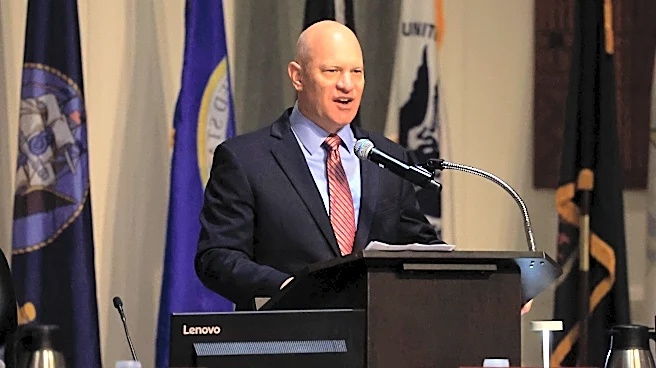
and the public for dangerous aquatic conditions. Dallas Cooke, JFRD’s Division Chief of Rescue, demonstrated the machine, highlighting its dual purpose in rigorous responder training and public education. The simulator can move up to 3,000 gallons of water, allowing instructors to precisely control the intensity of the water flow, from a gentle current to a forceful simulation of ocean rip currents. This controlled environment provides realistic exposure for JFRD’s ocean lifeguards and swift water rescue teams without the inherent dangers of live ocean drills. The acquisition of the Slipstream comes at a crucial time, as the region has experienced an increase in traumatic water-related incidents. The Jacksonville City Council approved $13,900 in grant funding from the Florida Department of Children and Families (DCF) for the purchase, with the state-funded grant fully reimbursing the city for the equipment and associated training expenses.
Why It's Important?
The introduction of the Slipstream rip current simulator is a significant advancement for public safety and emergency preparedness in Jacksonville and the broader Northeast Florida region. Given Florida's extensive coastlines and numerous waterways, the risk of water-related incidents, particularly rip currents, is consistently high. This new technology allows JFRD to conduct highly realistic training in a controlled environment, which is crucial for improving the effectiveness and safety of rescue operations. Enhanced training directly translates to better outcomes during actual emergencies, potentially saving lives and reducing injuries for both victims and rescuers. The simulator's dual role in public education is also vital, as it can be used to teach community members how to identify and react to rip currents, fostering greater water safety awareness. This investment underscores a proactive approach to public safety, addressing a critical need identified by an uptick in water-related incidents. Furthermore, the grant funding from the Florida Department of Children and Families highlights a collaborative effort between local and state entities to bolster emergency services without burdening local taxpayers, setting a precedent for similar initiatives in other coastal communities.
What's Next?
The Jacksonville Fire and Rescue Department will integrate the Slipstream rip current simulator into its regular training curriculum for ocean lifeguards and specialized swift water rescue teams. This will involve developing new training modules and protocols to maximize the benefits of the realistic simulation capabilities. JFRD also plans to utilize the simulator for public education initiatives, potentially hosting demonstrations and workshops to teach community members about rip current safety and general water safety practices. This could include outreach programs at local schools, community centers, and beach safety events. The success of this program may encourage other coastal communities in Florida and across the U.S. to invest in similar advanced training technologies, potentially leading to broader adoption of such simulators for water rescue preparedness. JFRD will likely monitor the effectiveness of the new training methods by tracking incident response times and rescue outcomes, using this data to further refine their strategies and justify future investments in public safety technology. The full reimbursement of costs through the state grant may also encourage other departments to seek similar funding opportunities for specialized equipment.
Beyond the Headlines
The deployment of the Slipstream simulator represents a broader trend in emergency services towards leveraging advanced technology for training and preparedness. This move signifies a shift from traditional, often less controlled, training methods to highly precise and repeatable simulations, which can significantly reduce risks for trainees while enhancing skill development. Ethically, this investment reflects a commitment to the highest standards of public safety, acknowledging the inherent dangers of water environments and proactively mitigating them. Legally, improved training can reduce liability risks for emergency services by ensuring personnel are optimally prepared for challenging situations. Culturally, the simulator can foster a greater sense of confidence and professionalism within JFRD, potentially attracting more skilled individuals to water rescue roles. In the long term, the data gathered from simulator-based training could inform best practices for water rescue operations nationwide, contributing to a standardized approach to aquatic safety. This technological adoption also highlights the increasing importance of inter-agency collaboration and grant funding in enabling local departments to acquire cutting-edge tools that might otherwise be financially out of reach.