





What's Happening?
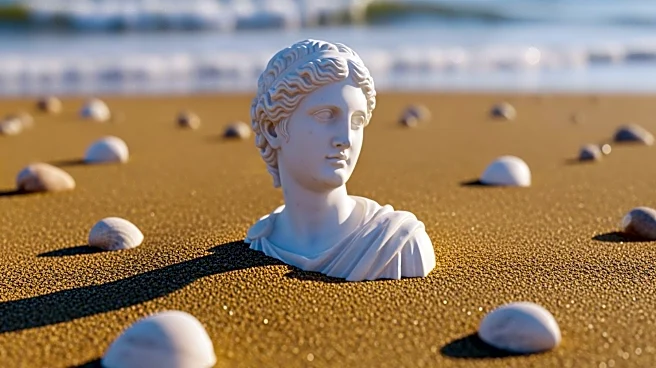
A marble bust believed to depict the Roman goddess Venus was discovered during redevelopment work at La Almadraba beach in Alicante, Spain. The bust, featuring a Hellenistic-inspired hairstyle, is thought to date back to the 1st or 2nd century CE. This
discovery is considered one of the most significant finds of Roman sculpture in the region. The bust was found alongside the foundations of a Roman villa, pottery shards, and coins, indicating the historical richness of the area. The Alicante City Council has been conducting archaeological surveys since 2009 as part of the beach's redevelopment project.
Why It's Important?
The discovery of the Venus bust is significant for both historical and cultural reasons. It provides insight into the Roman presence in Spain and the artistic styles of the period. Such findings enhance our understanding of ancient Roman life and their influence on European history. The bust's excellent preservation and artistic quality make it a valuable addition to the study of Roman art and architecture. This discovery also highlights the importance of archaeological work in uncovering and preserving historical artifacts, contributing to the cultural heritage of the region.