







What's Happening?
At the Navy League’s Sea-Air-Space conference, military officials discussed the potential benefits of deploying Space Domain Awareness (SDA) technology on naval ships. Rear Adm. Karrey 'DeWayne' Sanders, deputy commander of Navy Space, highlighted that
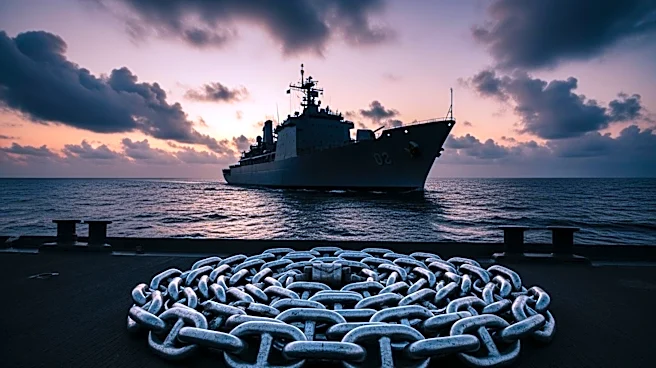
maritime assets equipped with SDA technology would be more dynamic and harder to target than terrestrial counterparts. This approach could enhance the military's ability to monitor satellites from new perspectives, leveraging the vast coverage of the world's oceans. The initiative would primarily involve upgrading existing naval platforms, although the development of new capabilities is not ruled out. The integration of SDA technology on ships would require policy adjustments, as the Space Force currently oversees SDA operations.
Why It's Important?
The proposal to use naval ships for satellite tracking represents a strategic shift in how the military approaches space domain awareness. By utilizing mobile maritime platforms, the Navy could improve its resilience against threats and enhance its operational capabilities. This development is significant as space becomes an increasingly contested domain, with rapid advancements in technology and potential adversarial threats. The ability to track satellites from the sea could provide the U.S. military with a tactical advantage, ensuring better protection of its space assets and enhancing national security.
What's Next?
The Navy will need to assess the technical and logistical requirements for implementing SDA technology on ships. This includes potential upgrades to existing vessels and the development of new policies to facilitate the integration of space operations with maritime capabilities. Collaboration with the Space Force and other military branches will be essential to address the challenges of operating in multiple domains. The success of this initiative could lead to broader adoption of seaborne satellite tracking, influencing future military strategies and defense policies.