




What's Happening?
Former CIA deputy director Michael Morell has recounted his conversation with President George Bush aboard Air Force One on September 11, 2001. Morell, who served as the president's daily intelligence briefer, was with President Bush in Florida when the attacks
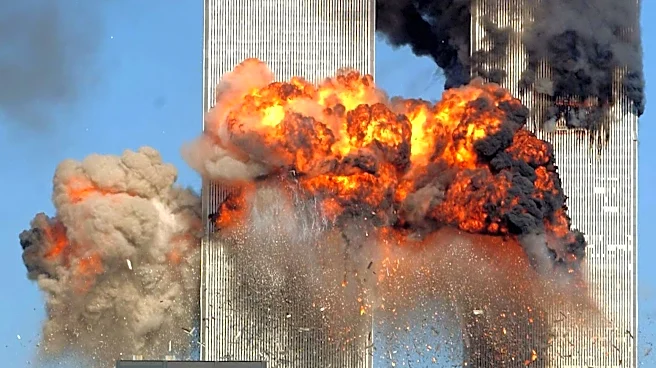
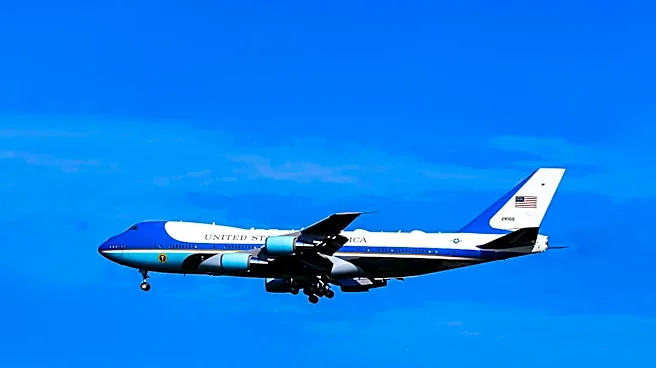
began. He initially briefed President Bush on the morning of September 11, with no discussion of terrorism. Shortly after, Morell was informed of a plane crashing into the World Trade Center. As events unfolded, with a second plane hitting the towers, Morell concluded it was a terrorist attack. Due to the escalating situation, President Bush was evacuated from Emma E. Booker Elementary School and taken to Air Force One. During the flight, President Bush asked Morell who was responsible for the attacks. Morell suggested Osama bin Laden and al-Qaeda were likely behind them, a conclusion later corroborated by the CIA's own analysis of flight passenger lists against terrorist databases. Air Force One was escorted by F-16 fighters during its return to Washington, D.C., to guard against potential surface-to-air missile threats. Morell characterized the events of 9/11 as a national failure encompassing intelligence, policy, congressional oversight, legislation, and public attitudes.
Why It's Important?
This firsthand account from a key intelligence official provides critical insight into the immediate aftermath of the 9/11 attacks and the decision-making process at the highest levels of U.S. government. Morell's recollection highlights the rapid assessment of intelligence during a national crisis and the initial identification of perpetrators. His role as the president's intelligence briefer underscores the direct flow of information to the Commander-in-Chief during a period of extreme uncertainty and national threat. The detail about the F-16 escort illustrates the heightened security concerns and the perceived threats to the President's safety. Furthermore, Morell's broader assessment of 9/11 as a 'national failure' points to systemic issues across various governmental and societal sectors, offering a retrospective critique that continues to inform discussions on national security and intelligence reform. This narrative is crucial for understanding the historical context of U.S. counter-terrorism policies and the evolution of intelligence gathering post-9/11.
What's Next?
While this account is a historical recollection, its release contributes to the ongoing public discourse surrounding the September 11 attacks and their legacy. Such detailed personal narratives from key figures often prompt further historical analysis and can influence how future generations understand pivotal national events. For intelligence agencies and policymakers, these reflections can serve as case studies for crisis management, intelligence assessment under pressure, and inter-agency coordination. The discussion of 'national failure' may continue to fuel debates on accountability and improvements in national security frameworks. Future commemorations of 9/11 will likely incorporate such personal testimonies, reinforcing the human element of the tragedy and the governmental response. The insights provided by Morell could also inform academic studies on presidential decision-making during crises and the role of intelligence in shaping national policy.
Beyond the Headlines
Morell's account delves into the profound psychological and operational pressures faced by leaders and intelligence officials during an unprecedented national crisis. The immediate need to identify the perpetrators, coupled with the uncertainty of further attacks, created an environment of intense decision-making. His suggestion of Osama bin Laden and al-Qaeda, even before full confirmation, highlights the reliance on expert judgment and pattern recognition in intelligence analysis. The narrative also subtly touches upon the resilience and adaptability of government operations under duress, as evidenced by the continued functioning of the presidency and intelligence gathering aboard Air Force One. The characterization of 9/11 as a 'national failure' extends beyond mere intelligence shortcomings, suggesting a broader societal and governmental unpreparedness that led to a re-evaluation of national priorities and security paradigms. This perspective underscores the complex interplay between intelligence, policy, public perception, and legislative action in shaping a nation's response to catastrophic events.