









What's Happening?
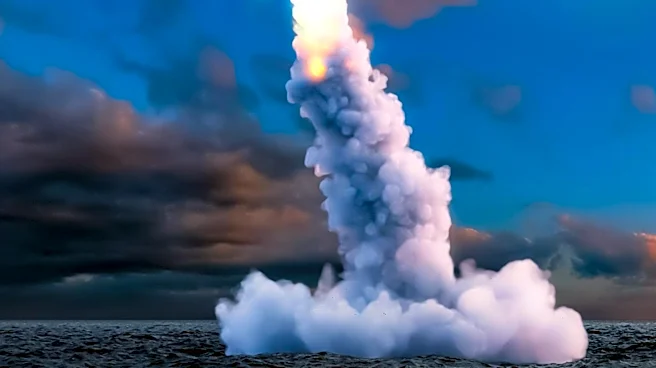
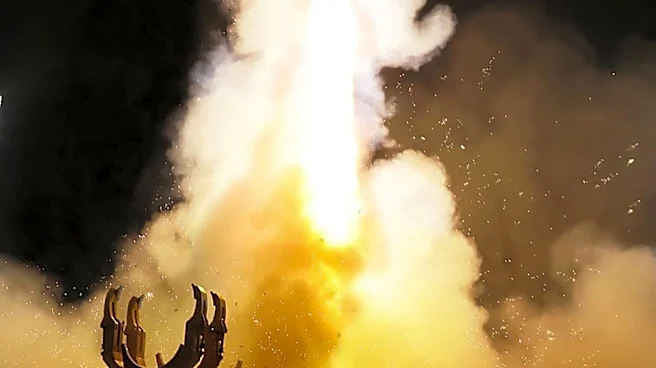
North Korea has reportedly tested a 'newly designed' air-defense missile system and conducted a long-range strategic cruise missile strike drill, according to the state-owned Korean Central News Agency (KCNA) on November 5. The air-defense test, conducted on November 4,
aimed to assess the system's technical characteristics, including guidance modes, target identification and tracking capabilities, and detection information processing. KCNA images showed a slender, dark missile being fired vertically from a truck-mounted system. On the same day, a firepower subunit in eastern North Korea carried out a strike drill with long-range strategic cruise missiles against a simulated airfield target. Details regarding the cruise missile's flight distance, path, or impact were not provided, but KCNA images depicted a runway with aircraft silhouettes and multiple impacts causing smoke and small fires.
Why It's Important?
These tests by North Korea are significant as they demonstrate continued advancements in its military capabilities, particularly in air defense and long-range strike options. The development of a 'newly designed' air-defense system suggests an effort to enhance its ability to counter potential aerial threats, which could complicate regional security dynamics. The strategic cruise missile drill, targeting a simulated airfield, indicates North Korea's focus on precision strike capabilities against critical infrastructure. Such military exercises and technological developments contribute to heightened tensions in the Korean Peninsula and the broader Indo-Pacific region, potentially prompting responses from neighboring countries and the United States to bolster their own defense postures and intelligence gathering. The lack of detailed information on the missile's performance also creates uncertainty, which can be a tool for deterrence or a source of miscalculation.
What's Next?
The international community, particularly the United States, South Korea, and Japan, will likely closely monitor North Korea's future military activities and analyze the capabilities demonstrated in these recent tests. Further intelligence gathering will aim to ascertain the true technical specifications and operational readiness of the new air-defense system and the strategic cruise missiles. These developments could lead to renewed calls for international sanctions or diplomatic efforts to de-escalate tensions. North Korea may continue to conduct similar tests to refine its systems and signal its military strength, potentially coinciding with political events or in response to perceived threats. The ongoing military modernization efforts by North Korea will remain a key focus for regional security analysts and policymakers.
Beyond the Headlines
The repeated missile tests by North Korea, including the development of advanced air-defense and cruise missile systems, underscore a long-term strategic objective to enhance its deterrence capabilities and potentially project power. Beyond the immediate military implications, these actions also serve as a domestic propaganda tool, reinforcing the regime's image of strength and self-reliance. The 'newly designed' aspect suggests indigenous development, which could indicate a growing self-sufficiency in military technology despite international sanctions. The targeting of a 'simulated airfield' in the cruise missile drill highlights a specific threat scenario, potentially aimed at regional airbases that could be used by adversaries. This continuous cycle of development and testing poses a persistent challenge to non-proliferation efforts and regional stability, requiring a multifaceted approach that combines deterrence, diplomacy, and intelligence.