


What's Happening?
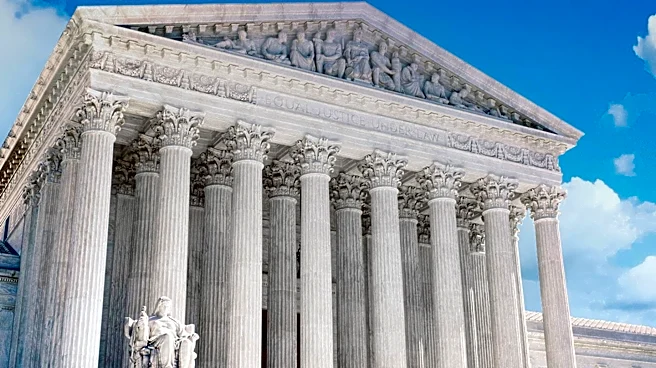
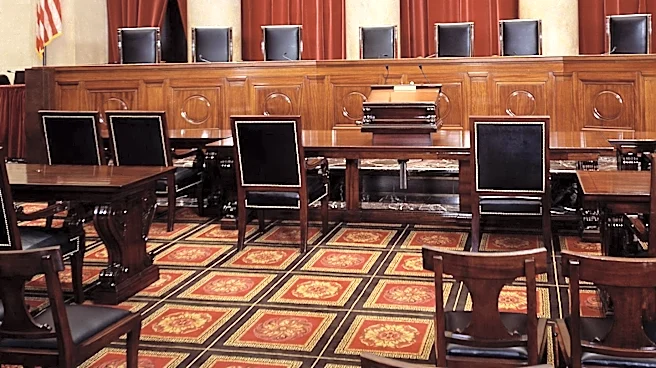
Representative Jim Clyburn (D-SC) has publicly voiced his support for expanding the U.S. Supreme Court to 13 justices. During an appearance on NBC News's 'Meet the Press,' Clyburn endorsed the idea, which has been proposed by some within the Democratic
Party, including former Vice President Kamala Harris. He stated that 13 would be a 'pretty good number' for the court, suggesting it would help ensure justices adhere to the constitutional underpinnings of the nation. Clyburn also expressed regret over his past defense of Justice Clarence Thomas during Thomas's 1991 confirmation process. He admitted that he had considered Thomas a 'good friend' at the time and supported him despite political differences, but now believes it was a mistake, remarking that he 'had no idea that Clarence Thomas would rebel the way he has against his own background and experiences.' Clyburn criticized Thomas for moving 'from an angry leftist to a very angry rightist,' referencing Thomas's earlier activist days.
Why It's Important?
Rep. Clyburn's endorsement of expanding the Supreme Court carries significant weight due to his influential position within the Democratic Party. His support could galvanize efforts among Democrats to pursue court expansion, a move that would fundamentally alter the composition and ideological balance of the nation's highest court. This proposal is seen by proponents as a way to counteract the current conservative majority, which they argue has led to rulings that do not align with modern constitutional interpretations. Critics, however, view court expansion as 'court-packing,' a politically motivated attempt to undermine judicial independence and potentially set a precedent for future administrations to similarly alter the court for partisan gain. The debate over court expansion highlights deep divisions regarding the judiciary's role and its perceived politicization, impacting public trust in the institution and potentially leading to prolonged legislative battles.
What's Next?
The call for expanding the Supreme Court is likely to intensify political debate, particularly as the 2028 presidential primaries approach, given former Vice President Kamala Harris's previous remarks on the issue. While immediate legislative action to expand the court is improbable without significant bipartisan support, which is currently lacking, the discussion will continue to be a prominent feature in Democratic political discourse. Advocates will likely continue to highlight the current court's ideological leanings and specific rulings as justification for expansion, while opponents will emphasize the importance of judicial stability and independence. The issue could become a key talking point in future election cycles, influencing voter turnout and candidate platforms. Additionally, the ongoing scrutiny of Justice Thomas's ethics and judicial philosophy, as mentioned by Clyburn, will likely persist, fueling further discussions about judicial accountability and the integrity of the Supreme Court.
Beyond the Headlines
The debate surrounding Supreme Court expansion and the criticism of Justice Clarence Thomas delve into profound questions about the nature of judicial power, political polarization, and the interpretation of the U.S. Constitution. Clyburn's regret over his past support for Thomas underscores a broader ideological shift and disillusionment among some Democrats regarding the trajectory of conservative jurisprudence. The concept of 'court-packing' challenges the long-standing tradition of a nine-justice court, raising concerns about the potential erosion of the judiciary's non-partisan image and its role as a check on the other branches of government. This discussion also touches upon the evolving understanding of civil rights and constitutional law, with critics arguing that Thomas's decisions have diverged from the 'modern underpinnings' of the Constitution. The long-term implications could include a re-evaluation of judicial appointment processes, increased public engagement with judicial politics, and a potential reshaping of the balance of power within the federal government.