





What's Happening?
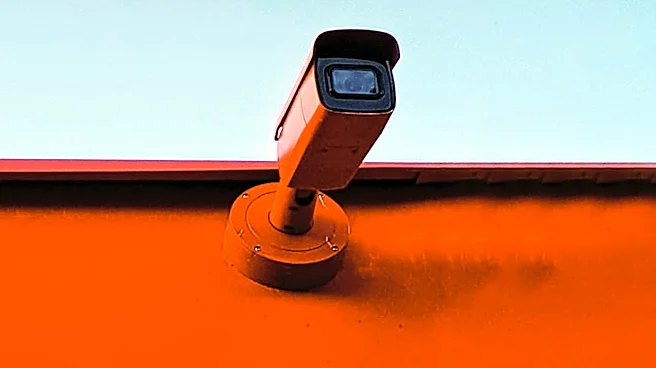
Congressman Thomas Massie from Kentucky has announced his intention to introduce legislation aimed at withdrawing federal funding from cities that utilize flock cameras. Massie argues that these cameras, which are automated license plate readers, infringe
on the privacy of law-abiding citizens. This proposal has sparked a debate over privacy and public safety. Local leaders, such as Metro Councilmember Dan Seum Jr., have dismissed Massie's concerns, emphasizing the cameras' role in solving crimes, including a recent triple murder case. The cameras are used by neighborhood associations, private businesses, schools, and law enforcement agencies in Jefferson and Floyd counties. Despite privacy concerns, officials assert that the cameras do not capture facial images and are crucial for investigations, especially in departments facing officer shortages.
Why It's Important?
The proposed legislation by Rep. Massie highlights the ongoing national debate over privacy versus security. Flock cameras are seen by many law enforcement agencies as essential tools for crime-solving, particularly in areas with limited police resources. However, the potential for misuse of collected data raises significant privacy concerns. If Massie's legislation gains traction, it could lead to a reevaluation of surveillance technologies across the U.S., impacting how cities balance public safety with individual privacy rights. The outcome of this debate could influence future policies on surveillance and data privacy, affecting both law enforcement practices and civil liberties.
What's Next?
If Massie proceeds with his legislative proposal, it will likely face significant debate in Congress, with potential opposition from cities and law enforcement agencies that rely on flock cameras for crime prevention and investigation. The discussion may also prompt cities to review and possibly revise their surveillance policies to address privacy concerns. Additionally, public opinion and advocacy from privacy rights groups could play a crucial role in shaping the legislative process and outcomes.