






What's Happening?
Antarctica's Concordia Station has recorded a temperature of minus 119.4 degrees Fahrenheit, marking the coldest reading at the station in 16 years. This temperature, recorded on July 18, is the lowest officially reported anywhere on Earth since 2012.
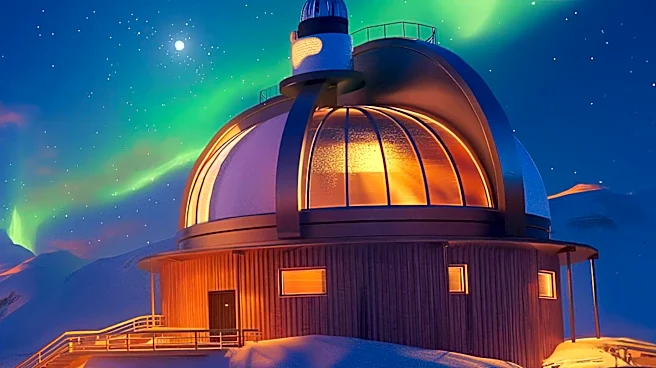
The extreme cold is attributed to Antarctica's polar winter, high elevation, and stable weather conditions. Concordia Station, operated by France and Italy, is located on the East Antarctic Plateau at an elevation of about 3,200 meters. The station's remote location, far from the coast, means it is not influenced by the moderating effects of the Southern Ocean. During the Antarctic winter, the sun does not rise above the horizon, allowing the snow-covered surface to radiate heat into space. The region's dry atmosphere further facilitates heat loss, making Concordia one of the coldest inhabited places on Earth.
Why It's Important?
The record low temperature at Concordia Station underscores the extreme weather conditions that can occur in Antarctica, even as global climate change continues to impact the planet. These temperature readings are crucial for understanding Earth's climate system, as they provide insights into atmospheric conditions and help refine climate models. The data collected at Concordia is valuable for improving weather forecasting and understanding heat and moisture movement in the atmosphere. Additionally, the station supports research in various fields, including glaciology and atmospheric chemistry. The extreme conditions at Concordia also serve as an analogue for long-duration space missions, offering insights into human adaptation to remote and confined environments.
What's Next?
While the recent cold spell at Concordia Station is significant, it does not surpass the world record low temperature of minus 128.6 degrees Fahrenheit recorded at Vostok Station in 1983. Scientists emphasize that individual weather events should not be confused with long-term climate trends. Despite ongoing global climate change, Antarctica's interior remains capable of producing extreme winter cold due to its unique atmospheric conditions. Researchers will continue to monitor temperature patterns and study the implications of such extreme weather events on global climate models. The data from Concordia will contribute to a better understanding of Earth's climate dynamics and help prepare for future climate-related challenges.
Beyond the Headlines
The recent temperature reading at Concordia Station highlights the stark contrast between the Northern and Southern Hemispheres. While parts of the Northern Hemisphere experienced intense summer heat waves, Antarctica remained in the depths of winter. This contrast is consistent with Earth's seasonal cycle, where periods of exceptional warmth in one hemisphere can coincide with exceptional cold in the other. The findings at Concordia also emphasize the importance of maintaining research stations in remote locations to gather critical data on Earth's climate and atmospheric conditions.