






What's Happening?
Oil prices have risen sharply following the U.S. announcement of a blockade on Iranian ports, set to begin on Monday. The price of U.S. crude oil increased by 8% to $104.24 per barrel, while Brent crude rose by 7% to $102.29. The blockade is a response
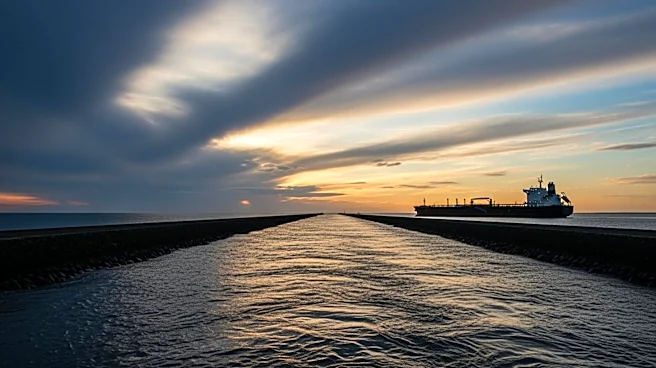
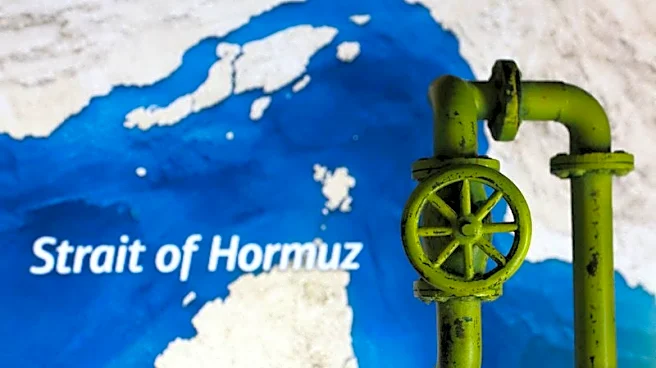
to the failure of peace talks between the U.S. and Iran, with the U.S. aiming to pressure Iran over its nuclear program. The Strait of Hormuz, a critical passage for global oil shipping, is at the center of this development, as it is a key route for oil exports from major producers like Saudi Arabia and Iraq. The U.S. Central Command has stated that the blockade will be enforced impartially against vessels entering or departing Iranian ports.
Why It's Important?
The rise in oil prices underscores the global economic impact of geopolitical tensions in the Middle East. The Strait of Hormuz is a vital artery for the world's oil supply, and any disruption can lead to significant fluctuations in oil markets. Higher oil prices can increase costs for consumers and businesses, potentially slowing economic growth. The U.S.'s decision to blockade Iranian ports is a strategic move to exert pressure on Iran, but it also risks escalating tensions in the region. The situation highlights the interconnectedness of global markets and the potential for regional conflicts to have far-reaching economic consequences.
What's Next?
The immediate effect of the blockade will likely be continued volatility in oil markets, with prices potentially rising further if the situation escalates. The U.S. may face diplomatic challenges as it seeks to justify its actions and manage relations with allies and other stakeholders affected by the blockade. Iran's response will be crucial, as it could choose to retaliate or seek alternative diplomatic solutions. The international community will be monitoring the situation closely, with potential implications for global energy security and economic stability. The U.S. may also explore additional measures to mitigate the impact of rising oil prices on its economy.