







What's Happening?
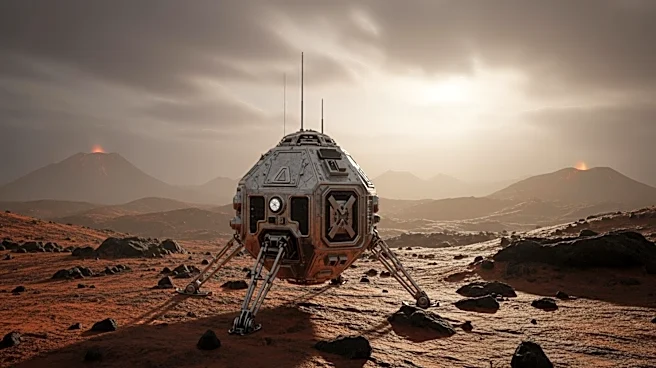
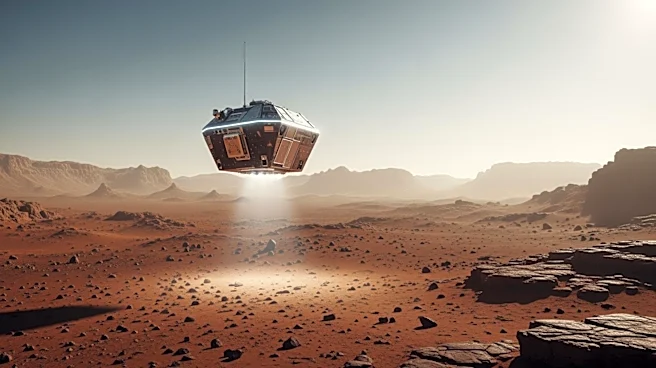
In 1978, NASA accidentally achieved its only landing on Venus when one of its four cone-shaped probes, designed to take atmospheric readings and then crash, survived impact and transmitted data for 67 minutes and 37 seconds. The probe, part of the Pioneer
Venus mission, was not built to withstand Venus's harsh surface conditions, which include extreme temperatures and pressure. The Soviet Union had previously succeeded in landing on Venus with robust landers, but NASA's approach focused on atmospheric study rather than surface endurance. The unexpected survival of the probe provided valuable data from the Venusian surface.
Why It's Important?
This accidental landing highlights the challenges and unpredictability of space exploration. The data collected by the probe offered unique insights into Venus's surface conditions, contributing to our understanding of the planet. The event underscores the importance of designing spacecraft capable of withstanding extreme environments, which is crucial for future missions to Venus and other planets. The incident also reflects the competitive nature of space exploration during the Cold War era, with the U.S. and Soviet Union pursuing different strategies to explore Venus. The lessons learned from this mission continue to inform current and future planetary exploration efforts.
What's Next?
NASA is planning to return to Venus with new missions, including the DAVINCI atmospheric descent probe and the VERITAS radar orbiter, targeting launches around 2031. These missions aim to build on past discoveries and provide a more comprehensive understanding of Venus's atmosphere and surface. The renewed interest in Venus exploration reflects a broader trend in planetary science, as researchers seek to uncover the mysteries of our solar system's planets. The success of these missions could pave the way for more ambitious exploration efforts, potentially involving landers designed to survive and operate on Venus's surface.