




What's Happening?
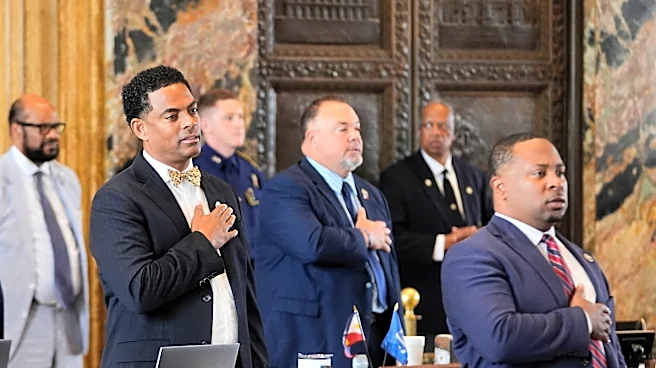
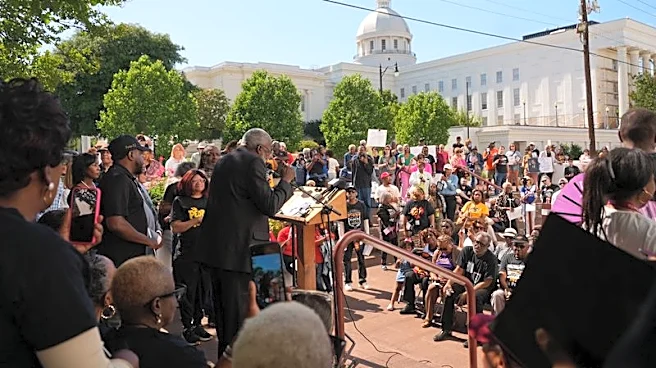
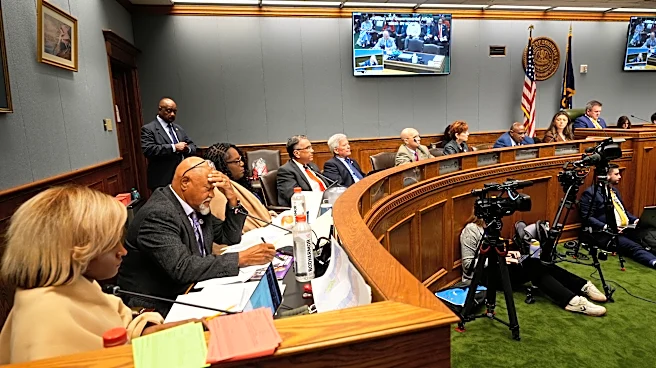
In South Carolina, the GOP-led state Senate recently rejected a redistricting plan backed by President Trump, which aimed to redraw House district lines to favor Republicans. This plan was specifically designed to challenge Rep. Jim Clyburn, the state's
only Democratic congressional representative. The rejection occurred on the first day of early voting for the state's primary elections, which are scheduled for June 9. The decision to maintain the current district lines means that Clyburn's district remains intact, allowing him to continue his campaign for an 18th term. The rejection of the redistricting plan is seen as a significant political event, as it preserves the status quo in a state predominantly controlled by Republicans.
Why It's Important?
The failure of the Trump-backed redistricting plan in South Carolina is significant for several reasons. It highlights the ongoing national debate over gerrymandering and the manipulation of district lines for political gain. The decision to reject the plan preserves the representation of Democratic voters in a state where Republicans hold significant power. This outcome is particularly important for Rep. Jim Clyburn, a key figure in the Democratic Party, whose influence extends beyond South Carolina. The decision also reflects broader political dynamics, as Republicans seek to leverage recent Supreme Court rulings to strengthen their hold on congressional seats. The preservation of Clyburn's district ensures that Democratic voices remain represented in the state.
What's Next?
With the redistricting plan rejected, South Carolina will proceed with its primary elections under the existing district lines. This decision may influence future political strategies, as both parties assess the implications of maintaining current district boundaries. For Democrats, the focus will likely be on mobilizing voters and maintaining their presence in a predominantly Republican state. For Republicans, the challenge will be to find alternative strategies to increase their representation in Congress. The outcome of the primary elections could provide insights into the political landscape of South Carolina and the effectiveness of each party's strategies moving forward.