



What's Happening?
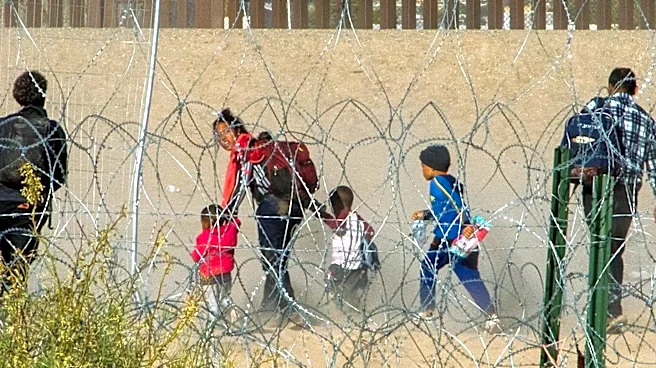
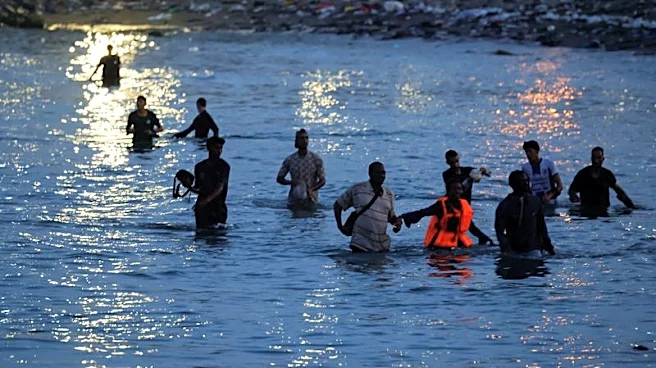
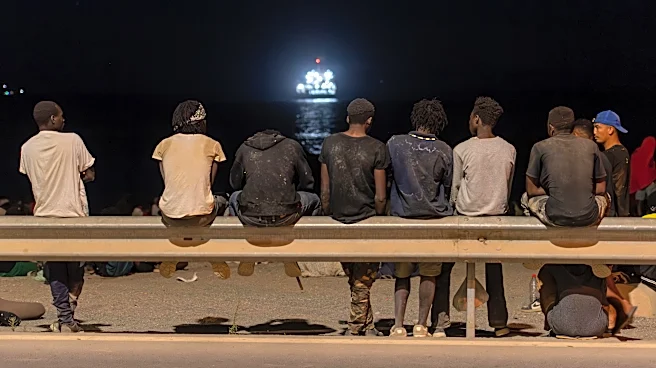
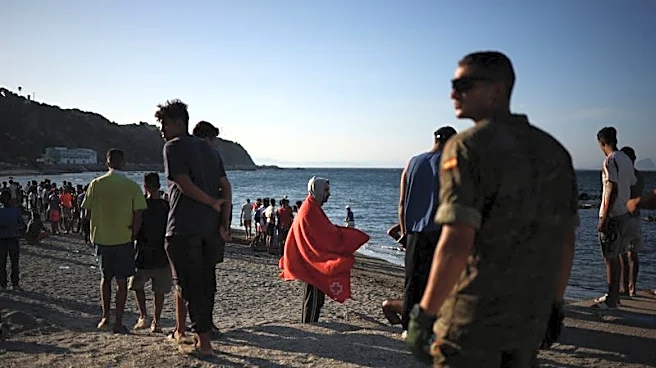
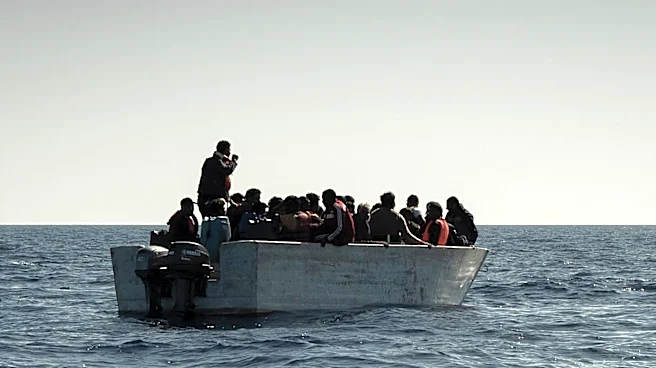
A social media campaign has been identified as a key factor in the recent surge of nearly 60,000 migrants attempting to enter the Spanish enclave of Ceuta. Following a Spanish Supreme Court ruling that migrants swimming to Ceuta cannot be summarily returned
to Morocco, social media platforms were used to encourage mass migration. Accounts and pages across various platforms spread messages suggesting that Spain had opened its borders, leading to a coordinated movement of people. The campaign involved smuggling networks and personal accounts directing migrants to Ceuta, promising opportunities in Europe. The situation has resulted in a humanitarian crisis, with many migrants drowning during the crossing.
Why It's Important?
This development highlights the powerful role of social media in influencing migration patterns and the challenges it poses to border security. The use of online platforms to mobilize large groups of people underscores the need for governments to monitor and address digital misinformation that can lead to real-world consequences. The crisis in Ceuta has significant implications for Spain's immigration policies and its relations with Morocco. It also raises broader questions about the responsibilities of social media companies in preventing the spread of misleading information that can exacerbate humanitarian crises.
What's Next?
In response to the crisis, Spanish authorities may implement stricter border controls and engage in diplomatic discussions with Morocco to address the root causes of migration. The situation could lead to increased international cooperation to combat smuggling networks and improve the management of migration flows. Social media companies may face pressure to enhance their content moderation practices to prevent the spread of misinformation that can trigger mass movements of people. The outcome of these efforts will likely influence future migration policies and the role of digital platforms in global migration dynamics.