







What's Happening?
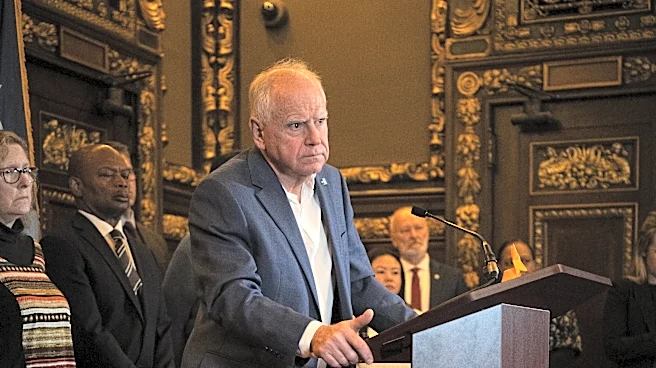
Governor Tim Walz has approved state disaster assistance for six Minnesota counties following a year marked by significant natural disasters. Four southern counties—Fillmore, Houston, Steele, and Waseca—will receive aid due to severe flooding that commenced
on September 19. Concurrently, Cook and Lake counties in northern Minnesota are slated for assistance to address damages from wildfires that began on July 7. This funding will be disbursed through Minnesota's Disaster Assistance Contingency Account, designed to support eligible local governments when their disaster expenses surpass their local financial capabilities. The aid aims to help repair critical public infrastructure damaged by these events.
Why It's Important?
The authorization of disaster aid is vital for the affected Minnesota counties, providing essential financial relief to communities grappling with the aftermath of floods and wildfires. This state-level support ensures that local governments can undertake necessary repairs and recovery efforts without being solely reliant on their own limited resources. The assistance is particularly significant as it addresses a range of natural calamities, from intense rainfall and mudslides in the south to infrastructure damage caused by wildfires in the north. By enabling these counties to rebuild, the aid helps stabilize local economies and restore essential services, demonstrating the state's commitment to its residents' well-being.
What's Next?
The precise amount of disaster assistance for each county will be finalized once all required documentation is submitted and recovery work is completed. This process involves local governments detailing their expenditures and damages for state review. The state's Homeland Security and Emergency Management division will continue its collaborative efforts with local officials to assess the full extent of the damage and coordinate recovery operations. This authorization follows previous state actions, including emergency declarations and the mobilization of the Minnesota National Guard during the wildfire crisis, indicating a sustained commitment to supporting these communities through their recovery phases.
Beyond the Headlines
This disaster aid highlights the critical role of state governments in providing a safety net for communities impacted by natural disasters, especially when federal assistance may not fully cover all costs. The establishment of a state public-assistance program, as outlined in Minnesota Statutes chapter 12B, ensures that counties with significant per-capita damage, even if ineligible for federal aid, still receive necessary support. This framework is crucial for maintaining resilience and ensuring equitable recovery across the state. The ongoing need for such programs underscores the increasing frequency and intensity of natural disasters, prompting continuous evaluation and enhancement of disaster preparedness and response mechanisms at the state level.