









What's Happening?
Students in an engineering class at Elizabethtown High School in Kentucky are actively engaged in creating projects that benefit their local community, winning the Altec Innovation Challenge multiple times. Under the guidance of engineering teacher Missy
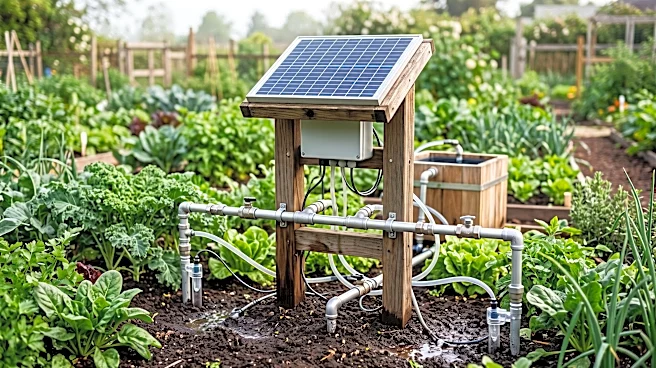
Mills, students have developed a lake-cleaning robot, an irrigation system for a community garden, and a power bench that generates energy through pedaling. The irrigation system, a 2024 winning project, is designed for a community garden managed by United Way of Central Kentucky, serving the homeless population and others in need. This system incorporates stationary sprinklers, soil moisture sensors, and a solar-powered design integrated with a rainwater collection system to provide precise water management for optimal plant growth. The students are currently working on the irrigation component, including moisture sensors and an interface to adjust water amounts based on plant type.
Why It's Important?
These student-led initiatives are vital for the Elizabethtown community, directly addressing local needs such as food security for vulnerable populations and environmental cleanliness. The projects demonstrate the practical application of STEM education, providing students with real-world engineering experience and fostering critical skills like problem-solving, communication, and leadership. This model of community-engaged learning can inspire other educational institutions across the U.S. to integrate similar programs, bridging the gap between academic learning and societal impact. For local businesses and organizations, these projects offer innovative solutions to community challenges, potentially leading to partnerships and further investment in local talent. The development of sustainable solutions, like solar-powered irrigation and rainwater collection, also contributes to broader environmental goals.
What's Next?
The Elizabethtown High School students will continue to refine and implement their irrigation system project, focusing on completing the technical aspects like moisture sensor integration and user interface development. The success of these projects may encourage continued funding and support from organizations like Altec and United Way of Central Kentucky, potentially expanding the scope of future student-led community initiatives. Other schools and communities might look to Elizabethtown's model as a blueprint for engaging students in impactful engineering projects. The ongoing maintenance and long-term effectiveness of these systems will be crucial, potentially involving future student cohorts or community volunteers. The power bench, lake-cleaning robot, and irrigation system are expected to continue serving their intended purposes, providing lasting benefits to the community.
Beyond the Headlines
Beyond the immediate community benefits, these projects highlight the transformative power of experiential learning in education. They demonstrate how high school students can contribute meaningfully to technological innovation and social welfare, challenging the perception that complex engineering solutions are solely the domain of professionals. This approach cultivates a sense of civic responsibility and empowers young people to become agents of change in their communities. The integration of sustainable technologies, such as solar power and rainwater harvesting, also serves as a practical example of environmental stewardship, potentially influencing broader community adoption of eco-friendly practices. The development of soft skills like teamwork and presentation, alongside technical expertise, prepares these students not just for engineering careers but for diverse leadership roles in society.