







What's Happening?
The European Union and the South American bloc Mercosur have provisionally enacted a significant trade agreement, creating a trans-Atlantic market valued at approximately $22 trillion with 720 million potential consumers. This deal, signed on January
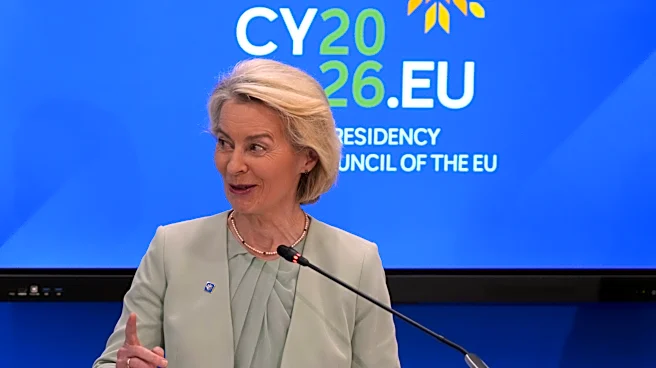
17, aims to boost exports by over 10% by 2038 for some nations. European Commission President Ursula von der Leyen's decision to provisionally implement the deal, bypassing the EU Parliament, faces legal challenges from EU lawmakers. The agreement could be halted if the EU judiciary rules against it. South American agribusiness sectors, including beef, fruit, and minerals, anticipate increased exports to Europe, while European automakers, pharmaceutical companies, and technology firms look forward to expanding into Mercosur markets. However, European farmers express concerns over price pressures and imports not adhering to similar environmental standards. French President Emmanuel Macron has called for safeguards to prevent economic disruptions within the EU and increased regulations in Mercosur nations.
Why It's Important?
The provisional enactment of the EU-Mercosur trade deal represents a significant shift in global trade dynamics, potentially enhancing economic ties between Europe and South America. This agreement could lead to increased export opportunities for both regions, benefiting industries such as agriculture, automotive, and technology. However, it also raises concerns about environmental standards and economic competition, particularly for European farmers who fear the impact of cheaper imports. The deal underscores the importance of multilateral trade agreements in a world where unilateral actions, such as tariffs, have become more common. It also highlights the ongoing debate over balancing economic growth with environmental and social responsibilities.
What's Next?
The future of the EU-Mercosur trade deal depends on the outcome of legal challenges within the EU. If the judiciary rules against the provisional enactment, the agreement could be halted, affecting the anticipated economic benefits. Meanwhile, discussions between EU and Mercosur leaders are expected to continue, focusing on addressing concerns related to environmental standards and economic safeguards. The deal's progress will be closely monitored by stakeholders, including businesses, environmental groups, and political leaders, as they assess its impact on trade relations and domestic industries.