



What's Happening?
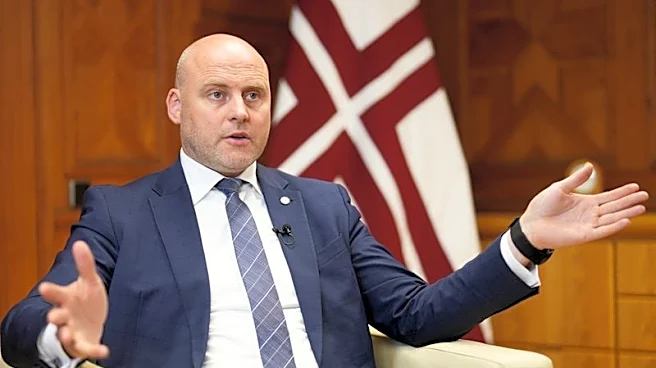
Hungary's parliament has confirmed Andras Baka, a former Supreme Court chief and critic of Viktor Orban, as the country's new president. Baka was nominated by the Tisza party, which holds a constitutional majority, and elected with 140 votes in favor.
His appointment follows the ousting of ex-President Tamas Sulyok, an Orban appointee, as part of Tisza's campaign to dismantle Orban's political structures. Baka's presidency is seen as a repudiation of Orban's legacy and a step towards establishing a new constitutional order.
Why It's Important?
Andras Baka's election as president represents a significant shift in Hungary's political landscape, moving away from Viktor Orban's nationalist policies. Baka's presidency is expected to reinforce democratic governance and constitutional principles, which had been undermined during Orban's tenure. This change is likely to impact Hungary's international relations, particularly with the European Union, as the new government seeks to align more closely with EU standards and values. The shift may also influence domestic policies, including judicial independence and media reforms.
What's Next?
With Baka's election, Hungary is poised to undergo significant political and constitutional reforms. The new government, led by Prime Minister Péter Magyar, plans to replace the Orbán-era Basic Law with a new constitution drafted through public participation. This process is expected to take one to one and a half years, during which Baka will serve as a symbolic figurehead for the restoration of liberal democracy. The government will likely face challenges from opposition parties, particularly Orban's Fidesz party, which has criticized the recent changes as authoritarian.
Beyond the Headlines
Baka's presidency carries symbolic weight, as it represents a repudiation of Orban's legacy and a commitment to restoring Hungary's democratic institutions. His previous legal battles, including a successful appeal to the European Court of Human Rights, highlight the importance of judicial independence and freedom of expression. The new administration's focus on constitutional reform and anti-corruption measures may lead to long-term shifts in Hungary's political culture, fostering greater transparency and accountability.