





What's Happening?
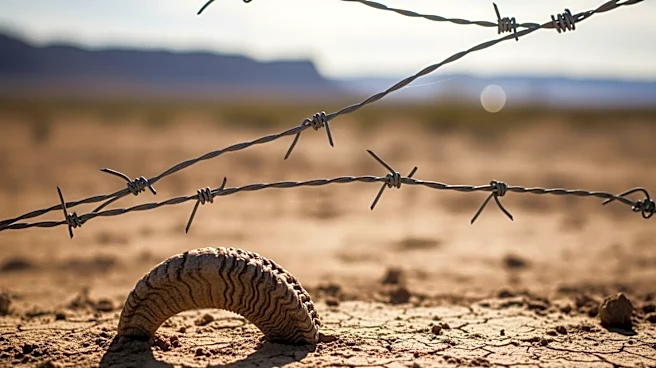
A Peninsular bighorn sheep was found dead, entangled in razor wire installed along the U.S.-Mexico border in California's Jacumba Wilderness. The discovery was made by Christina Aiello, a wildlife biologist with the Wildlands Network, who had previously
warned that the wire could pose a threat to wildlife. The wire, part of a security measure initiated last fall, is intended to deter illegal crossings. However, conservationists argue that it endangers local wildlife, including the endangered bighorn sheep. The U.S. Customs and Border Protection has stated its commitment to environmental stewardship while maintaining border security. Despite this, requests to remove the wire or create larger passages for wildlife have been largely ignored.
Why It's Important?
The incident highlights the ongoing conflict between border security measures and environmental conservation. The use of razor wire as a temporary security measure has raised significant concerns among conservationists about its impact on endangered species. The death of the bighorn sheep underscores the potential ecological consequences of such security measures. This situation reflects broader debates about balancing national security with environmental protection, a challenge that is particularly acute in border regions where wildlife habitats are intersected by human-made barriers.
What's Next?
Conservationists are likely to continue advocating for the removal of the razor wire or the implementation of wildlife-friendly alternatives. The incident may prompt further discussions between environmental groups and government agencies to find a compromise that ensures both border security and the protection of endangered species. The U.S. Fish and Wildlife Service and other relevant agencies may be called upon to assess the environmental impact of current border security measures and propose solutions to mitigate harm to wildlife.