








What's Happening?
Nobel Prize-winning chemist Omar Yaghi is leaving his position at the University of California, Berkeley to lead a new artificial intelligence institute at Tsinghua University in Beijing. Yaghi, who was awarded the Nobel Prize in Chemistry in 2025 for his work
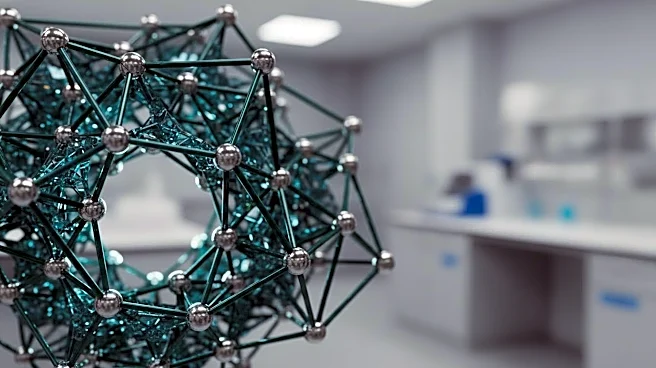
on metal-organic frameworks, will head the AI Chemistry and Materials Research Institute at Tsinghua. This new center, known as AIMATRY, will focus on the design and synthesis of materials using artificial intelligence. Yaghi's work on metal-organic frameworks has significant implications for environmental applications, such as carbon capture and water extraction from the atmosphere. His departure comes amid a trend of U.S. scientists moving abroad, partly due to reduced science funding and support in the U.S. under the Trump administration.
Why It's Important?
Yaghi's move to China highlights the growing competition for scientific talent on a global scale, particularly in the field of artificial intelligence and materials science. His expertise in metal-organic frameworks, which have potential applications in addressing climate change, represents a significant gain for China's scientific community. This development underscores the challenges faced by the U.S. in retaining top scientific talent, as funding cuts and policy changes have made the environment less conducive for research. The shift of prominent scientists like Yaghi to institutions abroad could impact the U.S.'s leadership in scientific innovation and technological advancement.
What's Next?
Yaghi's new role at Tsinghua University is expected to advance research in AI-driven materials science, potentially leading to breakthroughs in environmental technology. His work could foster collaborations between Chinese and international researchers, further integrating global scientific efforts. Meanwhile, the U.S. may need to reassess its science funding policies and support structures to prevent further brain drain and maintain its competitive edge in scientific research.