



What's Happening?
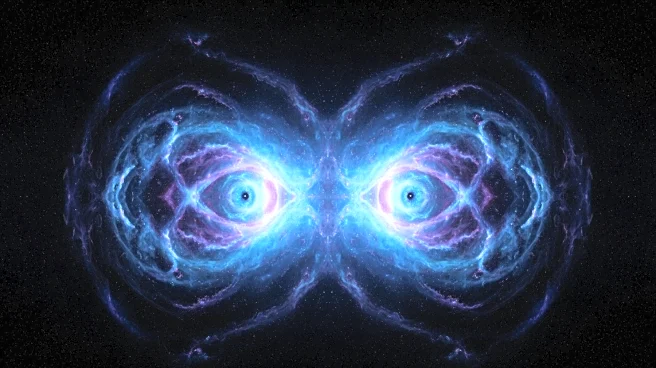
NASA's Hubble Space Telescope and ESA's Euclid have collaborated to capture a new image of the Cat’s Eye Nebula, NGC 6543. Located 4,400 light-years away in the constellation Draco, this planetary nebula is known for its intricate structure. The combined
observations from these telescopes provide a detailed view of the nebula's complex layers, offering insights into the processes occurring in dying stars. This collaboration highlights the capabilities of modern telescopes in enhancing our understanding of cosmic phenomena.
Why It's Important?
The new observations of the Cat’s Eye Nebula contribute to the scientific community's understanding of stellar evolution and the lifecycle of stars. By studying such nebulae, astronomers can gain insights into the processes that shape the universe. The collaboration between NASA and ESA demonstrates the importance of international partnerships in advancing space exploration and research, allowing for more comprehensive studies of celestial objects.