




What's Happening?
Ukraine and Poland are increasing coordination and cooperation along their shared border in response to intensified Russian attacks on Ukraine’s border regions. Ukrainian Deputy Minister for Restoration, Infrastructure and Transport Serhii Derkach met
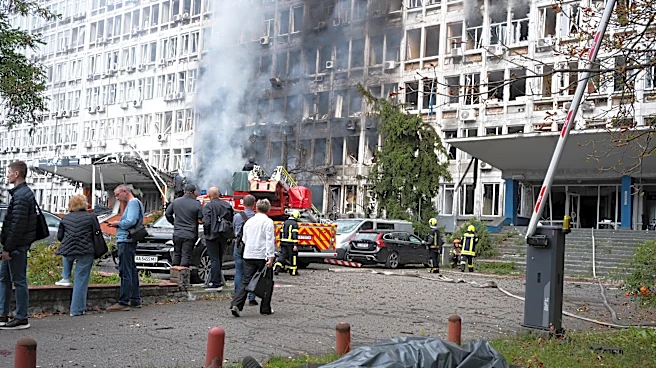
with Polish officials at the Yahodyn–Dorohusk border crossing to discuss these measures. Key topics included the operation of railway border crossings during security threats, aiming to protect passengers, train crews, and rolling stock while minimizing delays. The two nations are also focusing on developing joint controls at their border, with five such crossings already operational. Discussions are underway for a formal agreement to expand this format, potentially allowing Ukrainian border and customs officers to operate on Polish territory. Additionally, joint response procedures for air threats near border crossings are being established, encompassing rapid information sharing, temporary suspension of border processing, evacuation protocols, and swift resumption of operations once threats subside. This comes as the area around the Yahodyn–Dorohusk crossing has experienced three attacks in one week, and Russian drones have struck infrastructure and a passenger train in Volyn, close to Poland.
Why It's Important?
This enhanced cooperation is crucial for maintaining the functionality and security of the border, which serves as a vital transit route for Western military and humanitarian aid to Ukraine. Disruptions to this corridor could have significant ripple effects on supply chains, transport links, and regional risk sentiment. The increased Russian aggression near the Polish border, including drone strikes and attacks on infrastructure, underscores the growing threat to regional stability. For Poland, strengthening border defenses and civil-warning systems is a direct response to the potential for the conflict to spill over, including sabotage, arson attempts, drone attacks, and airspace violations. The economic implications are substantial, as a broader escalation would strain border infrastructure, logistics corridors, and public services in Poland, a country that has already absorbed millions of Ukrainian refugees. The measures aim to mitigate these risks and ensure the continued flow of essential support to Ukraine while safeguarding Polish territory and its population.
What's Next?
Ukraine and Poland are expected to finalize an agreement on joint border controls, which would provide a legal framework for expanding the presence of Ukrainian border and customs officers on Polish territory. This agreement will formalize and streamline existing cooperation efforts. Poland will continue to reinforce its border infrastructure, expand its civil-alert network, and add surveillance and security posts at border crossings. There will also be ongoing discussions and coordination regarding cross-border evacuation plans and refugee contingency planning, especially in anticipation of a potential new wave of displaced people if winter conditions and infrastructure strikes worsen in Ukraine. The focus will be on implementing clear and coordinated procedures to minimize the impact of security restrictions on passenger and freight traffic, ensuring the border remains operational despite ongoing threats.
Beyond the Headlines
The deepening security cooperation between Ukraine and Poland highlights the evolving nature of border management in conflict zones, where traditional national boundaries become points of shared vulnerability and strategic importance. The discussion of Ukrainian officers operating on Polish soil signifies a significant step towards integrated security, blurring conventional lines of sovereignty in the face of a common external threat. This collaboration also reflects a broader trend of regional alliances strengthening in response to geopolitical shifts, potentially setting a precedent for future cross-border security arrangements in Europe. The emphasis on protecting railway operations during security threats underscores the critical role of infrastructure resilience in modern warfare and the need for innovative solutions to maintain essential services. Furthermore, the measures taken by Poland to bolster its defenses and civil preparedness indicate a recognition that the conflict in Ukraine has direct and tangible implications for its own national security and societal stability, moving beyond mere humanitarian concerns to encompass direct defense against hybrid warfare tactics.