





What's Happening?
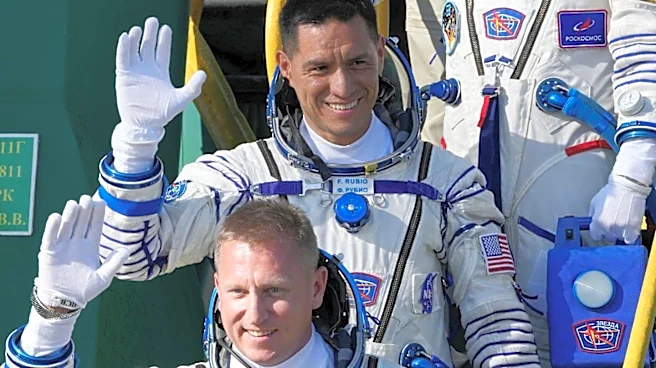
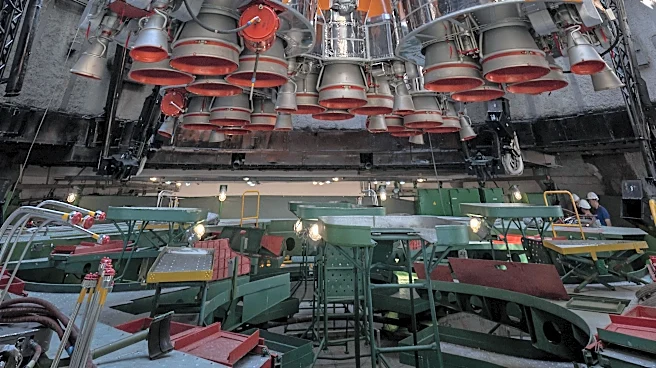
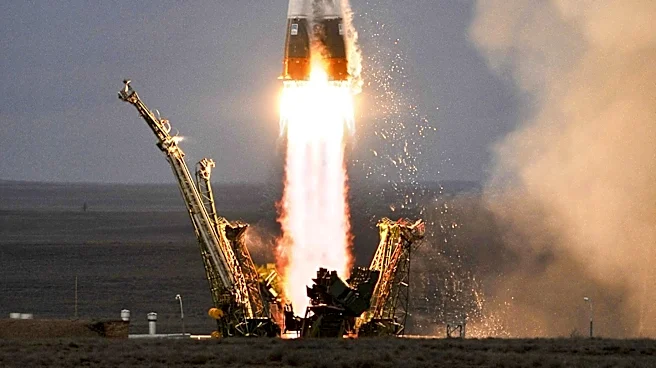
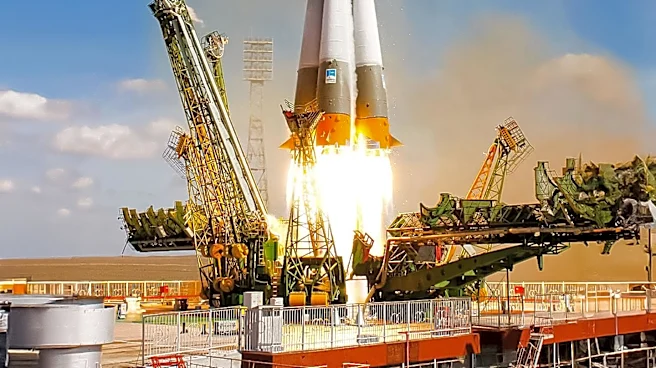
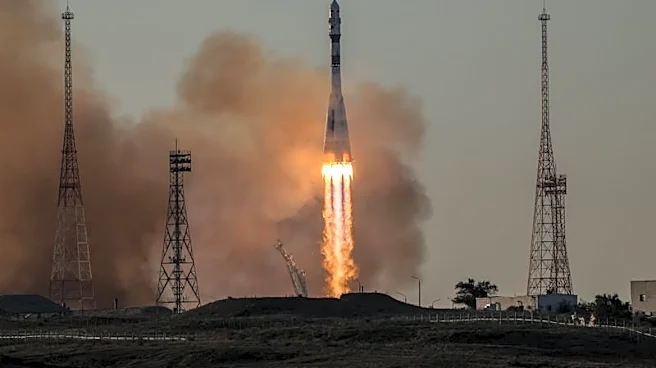
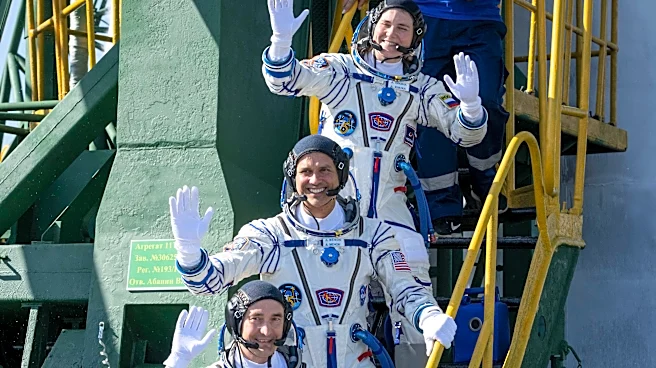
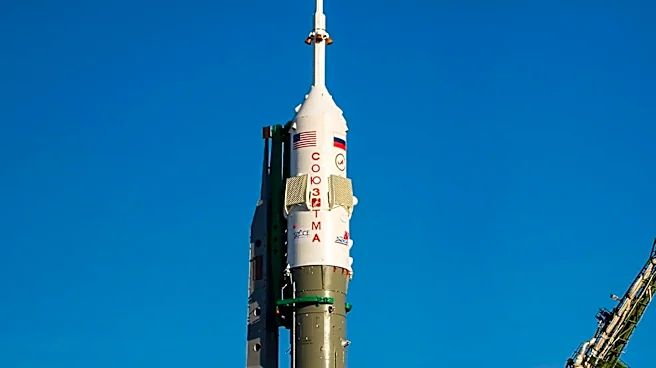
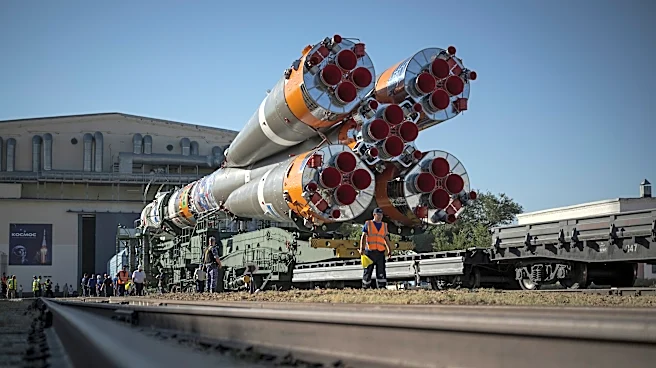
Russia has successfully launched an American astronaut, Anil Menon, along with two Russian cosmonauts, Pyotr Dubrov and Anna Kikina, to the International Space Station (ISS) from the Baikonur Cosmodrome in Kazakhstan. This mission marks the resumption
of crewed flights from a recently repaired launchpad and was notable for the joint attendance of NASA Administrator Jared Isaacman and Roscosmos director Dmitry Bakanov. The crew will join the existing team on the ISS for an eight-month mission. This launch is significant as it underscores ongoing cooperation between NASA and Roscosmos despite geopolitical tensions, particularly those arising from the Russia-Ukraine conflict.
Why It's Important?
The launch highlights the continued collaboration between the U.S. and Russia in space exploration, a partnership that has endured despite political and military tensions on Earth. The ISS remains a critical platform for scientific research and international cooperation in space. The mission also emphasizes the technical interdependence of the two nations, as U.S. solar panels power the ISS while Russian thrusters maintain its orbit. This collaboration is crucial for the sustainability of human spaceflight programs in both countries. The presence of high-level officials from NASA and Roscosmos at the launch signifies a commitment to maintaining this partnership, which is vital for future space exploration endeavors.
What's Next?
The future of the ISS, which is expected to be retired after 2030, remains a topic of discussion between NASA and Roscosmos. The recent meeting between Isaacman and Bakanov may have included talks on the station's health and potential future collaborations, although no new agreements were announced. As the ISS ages, technical challenges such as air leaks continue to test the partnership. Both agencies will need to address these issues to ensure the safety and success of ongoing missions. The geopolitical landscape may also influence future collaborations, with both countries needing to navigate diplomatic tensions to maintain their space programs.