

What's Happening?
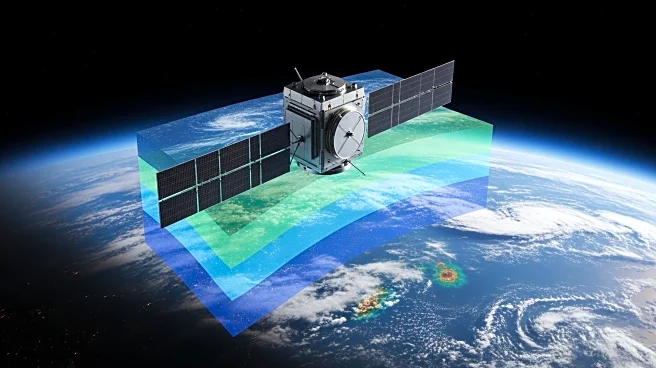
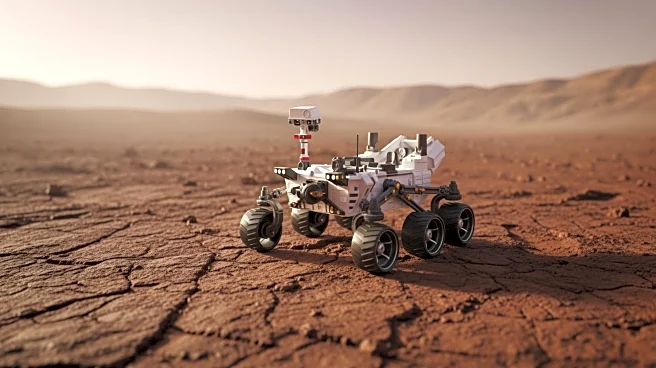
NASA is currently facing difficulties in reestablishing communication with its MAVEN (Mars Atmosphere and Volatile EvolutioN) spacecraft. The last contact with MAVEN was on December 6, and subsequent attempts to locate the spacecraft using the Curiosity
rover's Mastcam have been unsuccessful. The spacecraft appears to be tumbling, and its orbit trajectory may have changed, complicating efforts to pinpoint its location. This situation is further exacerbated by the upcoming Mars solar conjunction, which will prevent any communication with Mars missions from December 29 to January 16, 2026. During this period, Mars and Earth will be on opposite sides of the Sun, making it impossible for NASA to send commands to MAVEN.
Why It's Important?
The inability to communicate with MAVEN poses significant challenges for NASA's Mars exploration efforts. MAVEN has been crucial in studying the Martian atmosphere and its evolution, providing valuable data for understanding Mars' climate history. The loss of contact could hinder ongoing research and delay future missions that rely on MAVEN's data. Additionally, the situation highlights the risks associated with long-duration space missions, where technical issues can arise unexpectedly. The potential loss of MAVEN would be a setback for NASA's Mars exploration program, impacting scientific research and the planning of future missions.
What's Next?
Once the solar conjunction period ends on January 16, 2026, NASA plans to resume efforts to reestablish communication with MAVEN. Engineers will likely continue to analyze the situation to determine the cause of the spacecraft's tumbling and orbit change. If communication is restored, NASA will need to assess the spacecraft's condition and determine if it can continue its mission. The outcome of these efforts will be crucial for the future of MAVEN and its role in Mars exploration.