

What's Happening?
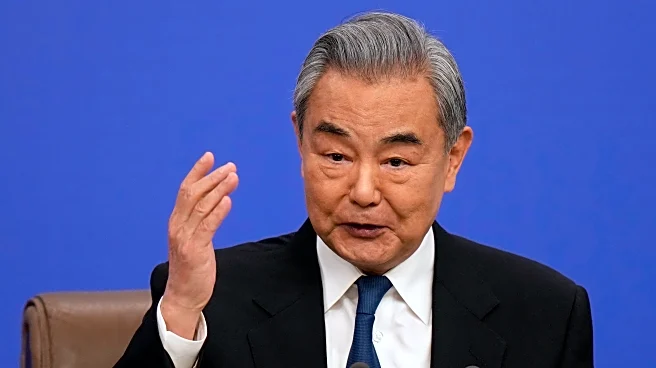
China has issued a warning against attempts to change the government in Iran, stating that such efforts lack popular support. This statement comes amid an ongoing US-Israeli military offensive in the region. Chinese Foreign Minister Wang Yi emphasized
the importance of respecting Iran's sovereignty and called for an immediate cessation of military operations in the Middle East to prevent further escalation. Wang's comments were made during a news conference in Beijing, where he also urged all parties to return to negotiations to resolve differences through dialogue. The situation is further complicated by a classified US National Intelligence Council report, which suggests that even a large-scale US military offensive would likely fail to dismantle Iran's military and clerical power structure.
Why It's Important?
The warning from China highlights the geopolitical complexities surrounding the US-Israeli offensive in Iran. China's stance underscores its strategic interest in maintaining stability in the Middle East, a region critical for global energy supplies. The call for non-interference and respect for sovereignty reflects China's broader foreign policy principles, which could influence international diplomatic efforts. The situation also poses a challenge to US foreign policy, as the classified report suggests that military action may not achieve the desired political outcomes. This could lead to increased tensions between the US and China, as well as complicate relations with other global powers involved in the region.
What's Next?
The immediate future may see increased diplomatic efforts to de-escalate tensions in the Middle East. China's call for dialogue suggests potential avenues for negotiation, although the success of such efforts remains uncertain. The US and its allies may need to reassess their strategies in light of the intelligence report's findings. Additionally, regional actors, including Iran, may seek to leverage international support to counter external pressures. The situation could also prompt further discussions at international forums, such as the United Nations, to address the broader implications of military interventions in sovereign nations.