



What's Happening?
Speaker of the House Mike Johnson, a Republican from Louisiana, expressed confidence that the ongoing partial government shutdown will conclude by Tuesday. The shutdown began on January 31 after Congress failed to pass a spending package, primarily due
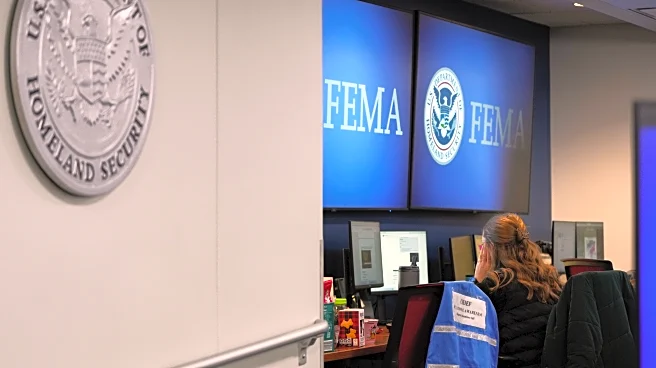
to disagreements over funding for the Department of Homeland Security (DHS). Johnson, speaking on NBC's 'Meet the Press,' highlighted logistical challenges, including weather-related travel disruptions, as factors complicating the legislative process. The Senate had passed a spending bill just before the deadline, which would fund most government agencies through September and extend DHS funding for two weeks to allow for negotiations over Immigration and Customs Enforcement reforms. The House must now approve this legislation. Johnson's confidence is tempered by a slim Republican majority in the House, which will narrow further once Democratic Rep.-elect Christian Menefee is sworn in, allowing Johnson to lose only one Republican vote if the chamber votes along party lines.
Why It's Important?
The resolution of the government shutdown is crucial for maintaining the operations of federal agencies and ensuring the continuity of public services. The shutdown affects various sectors, including national security, as the DHS oversees critical functions like immigration enforcement and border protection. The political dynamics in the House, with a narrow Republican majority, add complexity to the legislative process, potentially impacting the ability to pass future spending bills. The situation underscores the challenges of bipartisan negotiation in a divided Congress, where even minor shifts in party representation can significantly influence legislative outcomes. The shutdown also highlights the broader debate over immigration policy, a contentious issue that continues to polarize lawmakers and the public.
What's Next?
The immediate focus is on the House's approval of the Senate-passed spending bill. If the House passes the bill, it will temporarily fund government operations and provide a two-week window for further negotiations on DHS funding and immigration reforms. The outcome of these negotiations will be critical in determining the long-term resolution of the funding impasse. Political leaders will need to navigate intra-party divisions and bipartisan disagreements to reach a consensus. The situation may prompt further discussions on immigration policy and oversight, potentially influencing future legislative agendas and electoral strategies.