



What's Happening?
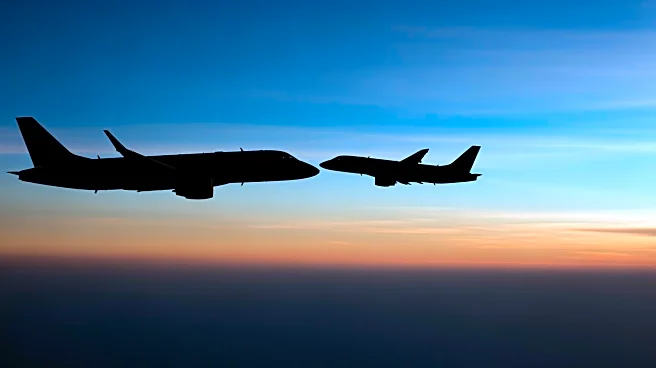
A JetBlue flight narrowly avoided a midair collision with a U.S. Air Force tanker near Venezuela on December 12, 2025. The incident occurred when the JetBlue Airbus A320, operating flight B61112 from Curaçao to New York, encountered the U.S. Air Force aircraft
without its transponder on. Transponders are crucial for air traffic control to track aircraft, and their absence can lead to dangerous situations. The U.S. Southern Command is currently reviewing the incident, emphasizing that military aircrews are trained to operate according to established procedures. The JetBlue flight crew reported the incident to federal authorities and will participate in any investigation. The Air Force tanker was reportedly within an approved range of the JetBlue flight, and it is not uncommon for military aircraft to fly with their transponders off during operations.
Why It's Important?
This incident highlights the potential risks associated with military and commercial aircraft sharing airspace, especially when military aircraft operate without transponders. The absence of transponder signals can lead to near-miss situations, posing significant safety risks to commercial flights. The event underscores the need for clear communication and coordination between military and civilian air traffic controllers to prevent such occurrences. The review by U.S. Southern Command and the involvement of federal authorities in the investigation reflect the seriousness of the incident. The outcome of this review could lead to changes in protocols to enhance air safety, particularly in regions where military operations are frequent.
What's Next?
The ongoing review by U.S. Southern Command will determine the facts surrounding the incident and assess whether any procedural changes are necessary. The findings could lead to recommendations for improved coordination between military and civilian air traffic control systems. Additionally, the incident may prompt discussions on the use of transponders by military aircraft in shared airspace to prevent future near-miss situations. Stakeholders, including the Federal Aviation Administration and military authorities, may need to collaborate on establishing clearer guidelines to ensure the safety of all flights operating in such regions.